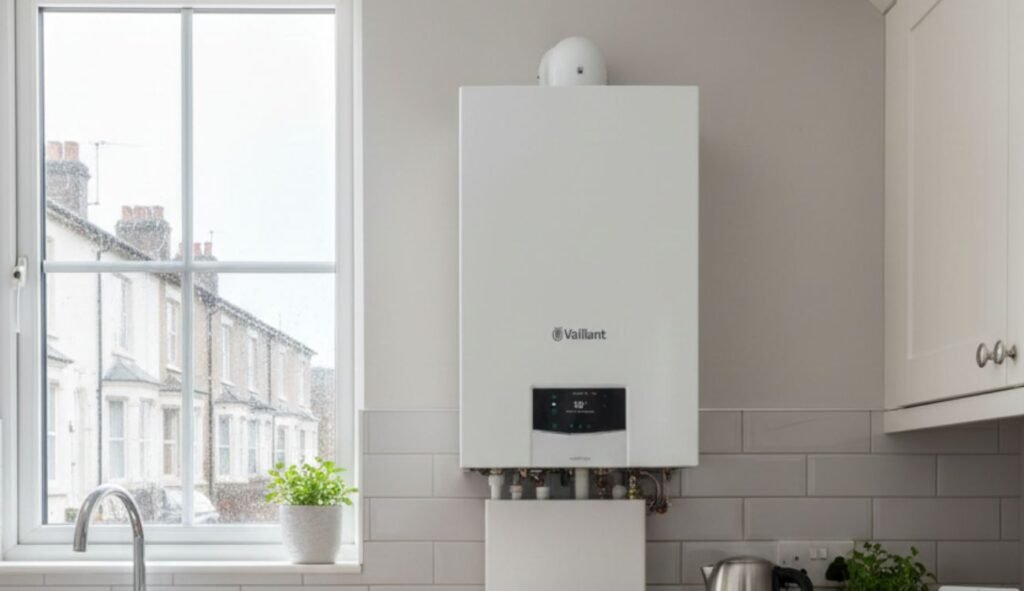
As a dedicated expert in the UK boiler industry, particularly serving homeowners and landlords across Tyne and Wear, Newcastle, and the wider North East of England, I’ve encountered the Vaillant boiler F20 fault code countless times—it’s that frustrating overheat alert that can leave your ecoTEC or similar model locked out, disrupting your home heating just when you need it most.
If you’re in the North East dealing with this error flashing on your display, rest assured it’s a common issue in our region’s variable weather, and in this guide, I’ll share my hands-on insights to help you understand and address it simply and safely.
For those in Tyne and Wear or Newcastle facing persistent boiler woes, I always recommend getting a professional assessment—Future Heat specialise in new boiler installations right here in the North East, offering efficient upgrades that could prevent faults like F20 for good. Reach out for a quote tailored to your local needs.
What Does the Vaillant Boiler F20 Fault Code Mean?
The Vaillant boiler F20 fault code means your boiler has detected an overheating condition in the return NTC sensor, triggering a safety lockout to prevent damage to the system. In my experience working on Vaillant models throughout the North East, this code acts as a protective measure when the return water temperature exceeds safe limits, often around 95°C, halting operation to avoid risks like component warping in your central heating setup.
The Role of the Return NTC Sensor
This sensor monitors water temperature returning to the boiler after circulating through radiators, and when it signals excessive heat, F20 flashes—common in our area’s older properties with uneven insulation.
What Causes the Vaillant Boiler F20 Fault Code?
The causes of the Vaillant boiler F20 fault code usually stem from issues that disrupt proper water flow or temperature regulation, leading to localised overheating in the system. Drawing from repairs I’ve done in draughty Newcastle homes and Tyne and Wear rentals, these often tie to maintenance oversights or hard water prevalent in the North East; let’s explore the main triggers.
Low Water Pressure
Low water pressure occurs when the system’s level drops below 1 bar, reducing circulation and causing heat to build up unevenly, triggering the F20 as a safeguard. This is especially common in North East properties with minor leaks from ageing pipes or evaporation in unvented systems.
How to Fix Low Water Pressure
- Check the pressure gauge—if below 1 bar, locate the filling loop (braided hoses under the boiler) and slowly open the valves to add water until it hits 1.2 bar with the system cold.
- Close the valves securely, reset the boiler by holding the button for 5-10 seconds, and test heating.
- Monitor for drops over a few days; inspect radiators and pipes for leaks.
- If it recurs, call a Gas Safe engineer to seal faults, costing £100-£200 in our region.
Faulty Circulation Pump
A faulty circulation pump fails to move water efficiently, leading to stagnant hot spots that overheat the return flow and prompt F20. In my view, this hits harder in larger North East homes where pumps wear from high demand or sludge in hard water supplies.
How to Fix Faulty Circulation Pump
- Listen for unusual humming—if present but weak, reset the boiler first.
- Bleed radiators to aid flow and repressurise.
- Engage a Gas Safe pro to test and replace the pump, around £200-£400 locally.
- Add a magnetic filter to prevent future debris buildup.
Blocked Heat Exchanger
A blocked heat exchanger results from limescale or sludge restricting passages, trapping heat and causing return temperatures to spike into F20 territory. Unique to our North East water quality, this buildup accelerates in untreated systems, mimicking a clogged artery.
How to Fix Blocked Heat Exchanger
- Add a descaling agent via the filling point for mild cases, circulating for 30 minutes.
- Flush the system manually if accessible, but reset first.
- Arrange a professional chemical flush, £300-£500 in Tyne and Wear.
- Install inhibitors annually to maintain clear channels.
Air in the System
Air in the system creates pockets that interrupt smooth circulation, leading to uneven heating and overheat signals like F20. This often follows repairs or seasonal startups in North East properties, where air enters through vents or loose fittings.
How to Fix Air in the System
- Turn off the boiler and cool it down.
- Bleed each radiator with a key, starting upstairs, until water spurts out.
- Repressurise post-bleeding and reset.
- If air persists, a Gas Safe check for entry points costs £100-£150.
Faulty NTC Sensor
A faulty NTC sensor inaccurately reads temperatures, falsely indicating overheating and forcing an F20 lockout. Over time in damp North East climates, sensors corrode or drift, a subtle issue I’ve fixed in many coastal rentals.
How to Fix Faulty NTC Sensor
- Reset the boiler to rule out glitches.
- Verify with a multimeter if handy, but pros handle this.
- Replace via Gas Safe engineer, £150-£250 including calibration.
- Pair with moisture-proofing for longevity.
Request a New Boiler Quote Today!
For those in Tyne and Wear or Newcastle facing persistent boiler woes, I always recommend getting a professional assessment—Future Heat specialise in new boiler installations right here in the North East, offering efficient upgrades that could prevent faults like F20 for good. Reach out for a quote tailored to your local needs.
FAQs
How does North East weather influence Vaillant F20 occurrences?
Chilly snaps can heighten F20 risks by straining pumps in under-insulated homes—pre-winter lagging in Tyne and Wear mitigates this.
What warranty tips apply to Vaillant boilers with F20?
Regular Gas Safe logs keep warranties intact for F20 fixes; check your policy in Newcastle for covered sensor swaps.
Are there apps for monitoring Vaillant F20 precursors?
Vaillant’s connectivity tools flag temp spikes early, useful for landlords overseeing multiple North East properties.
How often should I flush my Vaillant to avoid F20?
Every 2-3 years in hard water zones like the North East prevents exchanger blocks triggering F20.
Can smart home integrations reduce F20 in Vaillant setups?
Linking to Nest can optimise cycles, easing overheat strains in energy-conscious Tyne and Wear homes.

Jamie Maguire is Managing Director at Future Heat Ltd, the UK-based renewable energy company specialising in heat pumps, solar panels and energy-efficient boiler solutions. He leads the company’s strategic vision to decarbonise homes and businesses across the UK by delivering innovative, sustainable heating and power systems. Jamie is passionate about shaping the future of energy, supporting communities and empowering teams of skilled engineers to deliver lasting value and carbon reductions nationwide.