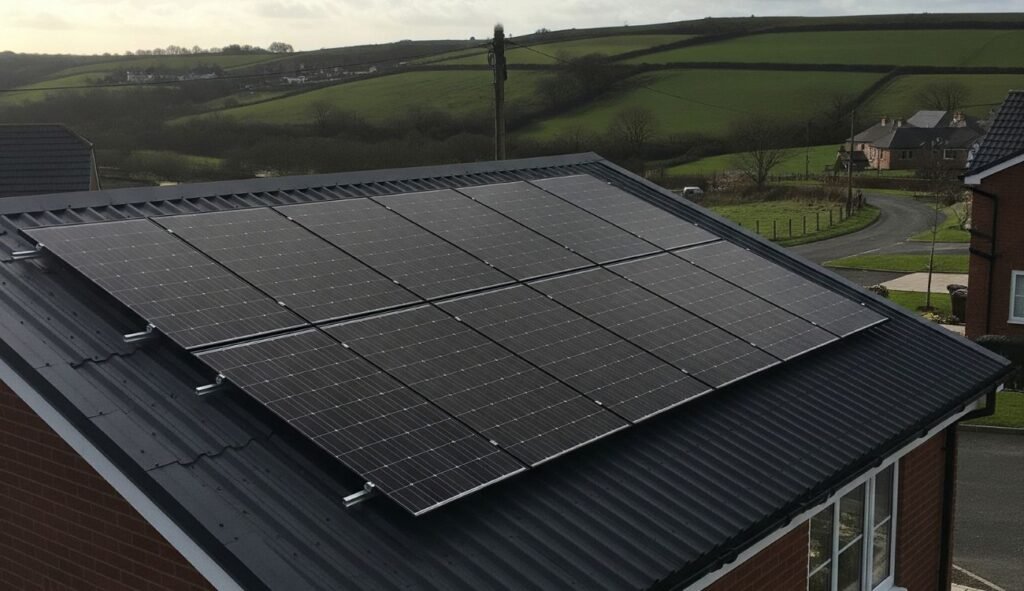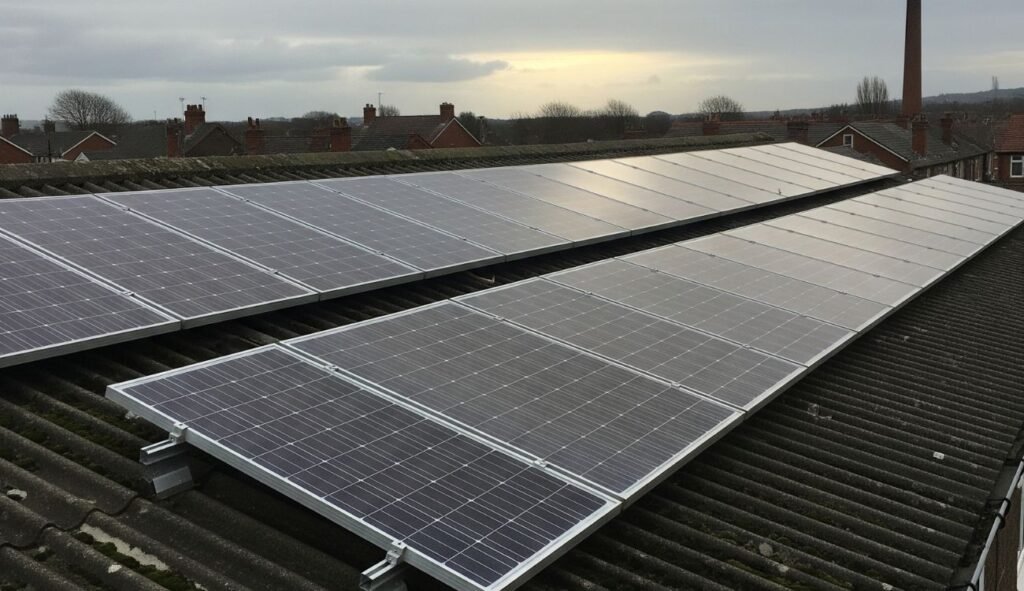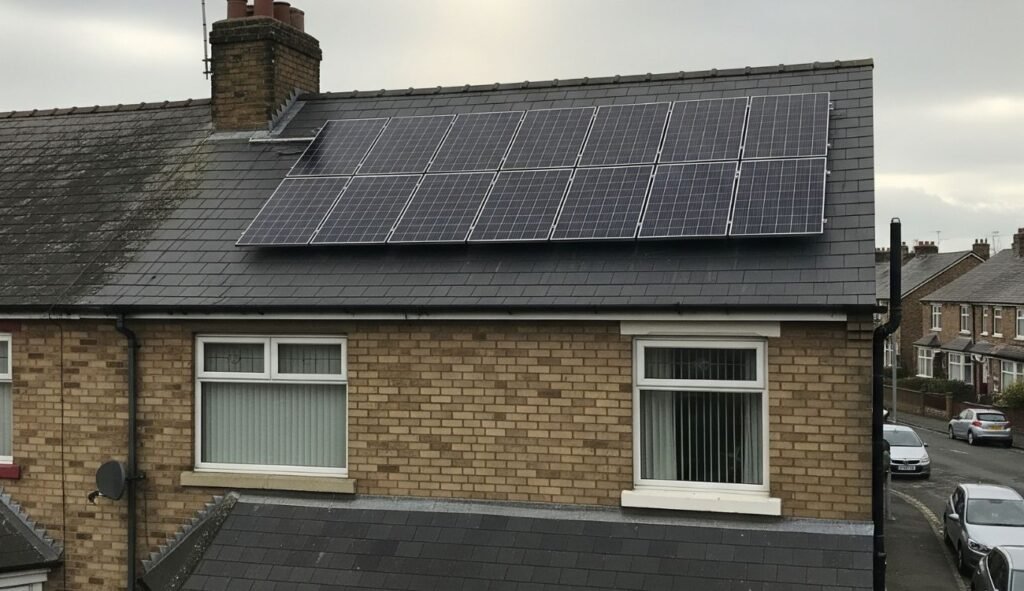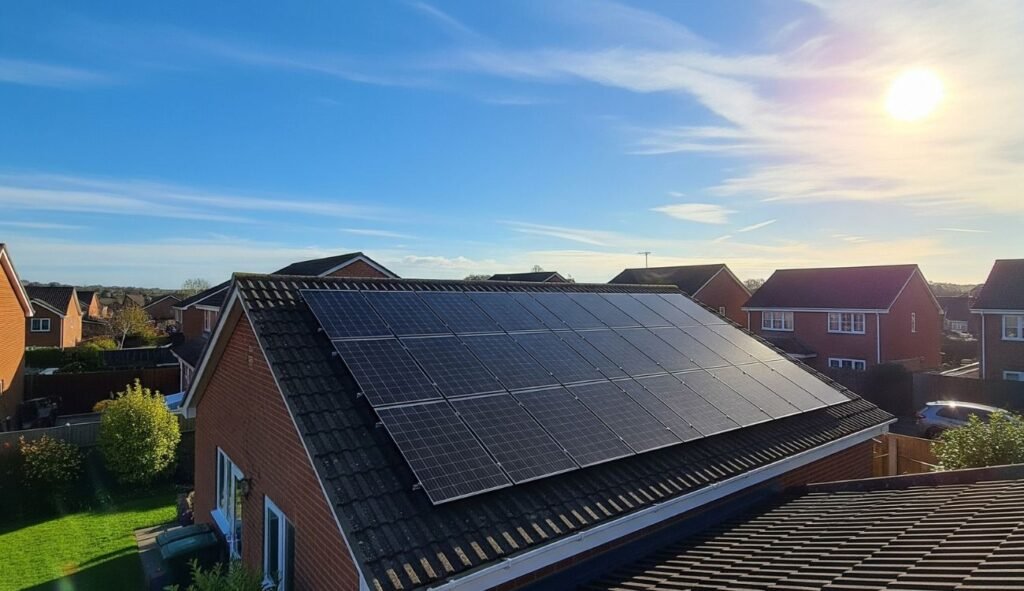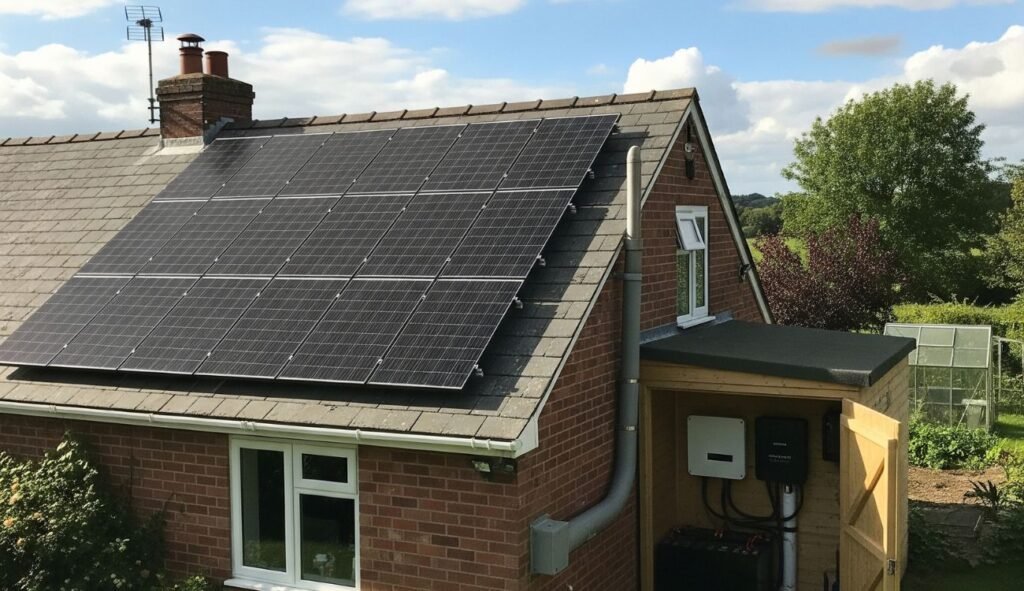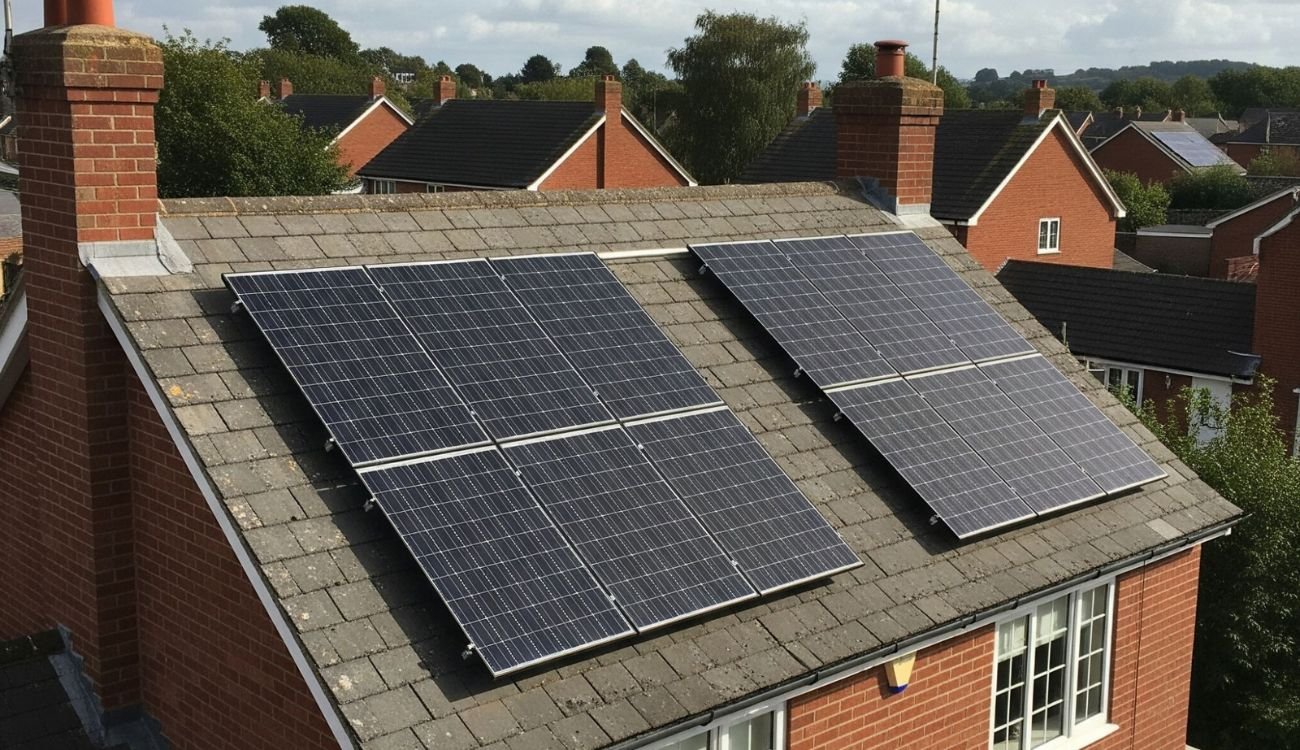

To charge a 300Ah lithium battery in the UK, you typically need 5 to 8 solar panels rated at 300W each, depending on your battery’s voltage (12V, 24V, or 48V), sunlight availability, and desired charging time.
For a 12V 300Ah battery, 5 to 6 panels (1,500–1,800W total) are often sufficient for a full charge in one day under optimal conditions. For faster charging or higher voltage systems (e.g., 48V), you may need 7 to 8 panels.
This guide provides clear, practical advice to help you size your solar panel system for efficient battery charging. Whether you’re in Newcastle, Sunderland, or rural Northumberland, understanding your energy needs and local solar conditions is key to making an informed investment in solar power.
How to Calculate the Number of Solar Panels Needed to Charge a 300Ah Lithium Battery?
To calculate the number of solar panels needed to charge a 300Ah lithium battery, you must consider the battery’s energy capacity, your location’s sunlight availability, and system inefficiencies.
Below is a step-by-step guide to make this calculation straightforward for UK homeowners, landlords, and other users.
1. Determine Battery Capacity in Watt-Hours (Wh)
Multiply the battery’s amp-hour (Ah) rating by its voltage (V) to get watt-hours (Wh).
For a 12V 300Ah battery: 300Ah × 12V = 3,600Wh (3.6kWh).
For a 24V 300Ah battery: 300Ah × 24V = 7,200Wh (7.2kWh).
For a 48V 300Ah battery: 300Ah × 48V = 14,400Wh (14.4kWh).
2. Account for Depth of Discharge (DoD) and Efficiency
Lithium batteries typically have a DoD of 80–95%, meaning you can use most of their capacity without damage. Assume 90% DoD and 90% charging efficiency.
Adjusted energy needed = Total Wh ÷ DoD ÷ Efficiency.
Example for 12V: 3,600Wh ÷ 0.9 ÷ 0.9 ≈ 4,444Wh.
3. Estimate Daily Solar Energy Production
- The UK averages 2.5–4.5 peak sun hours per day, depending on location and season (higher in summer, lower in winter). Use 2.8 hours for a conservative annual estimate in the North East (e.g., Newcastle or Sunderland).
- Required solar capacity = Adjusted Wh ÷ Peak sun hours.
- Example for 12V: 4,444Wh ÷ 2.8 hours ≈ 1,587W (1.59kW).
4. Calculate Number of Solar Panels
- Divide the required solar capacity by the wattage of each panel. Common residential panels are 300–400W.
- Example for 12V with 300W panels: 1,587W ÷ 300W ≈ 5.3 panels (round up to 6 panels).
Formula
Number of panels = (Battery Ah × Battery V ÷ DoD ÷ Efficiency ÷ Peak sun hours) ÷ Panel wattage
| Battery Voltage | Energy Capacity (Wh) | Adjusted Energy (Wh) | Peak Sun Hours | Required Solar Capacity (W) | Number of 300W Panels |
|---|---|---|---|---|---|
| 12V | 3,600Wh | 4,444Wh | 2.8 | 1,587W | 5–6 |
| 24V | 7,200Wh | 8,889Wh | 2.8 | 3,175W | 11 |
| 48V | 14,400Wh | 17,778Wh | 2.8 | 6,349W | 21–22 |
Expert Tip: This formula applies universally, whether you’re charging a 100Ah, 200Ah, 300Ah, or 400Ah battery. Simply replace the battery’s Ah rating in the formula to calculate the number of solar panels needed for any battery size.
For a precise setup tailored to your needs, Future Heat’s experts in Tyne and Wear can assess your property and provide a free solar panel quote.
What Factors Affect the Number of Solar Panels Needed?
Several factors influence the number of solar panels required to charge a 300Ah lithium battery effectively, especially in the UK’s variable climate.
- Sunlight Availability: The UK’s peak sun hours range from 0.5–1.5 in winter to 4–5 in summer. Northern areas like Northumberland receive about 20% less annual sunlight (around 2.8 peak sun hours/day on average) than southern regions (around 3.5).
- Panel Efficiency: Modern monocrystalline panels (15–22% efficiency) generate more power per square metre than polycrystalline panels.
- Battery Voltage: Higher voltage systems (e.g., 48V) require more panels due to increased energy capacity.
- Charging Speed: Faster charging (e.g., in one day) demands more panels than slower charging over multiple days.
- System Losses: Inefficiencies from inverters, charge controllers, and wiring can reduce output by 15–20%.
| Factor | Impact on Panel Count |
|---|---|
| Sunlight Availability | Fewer hours = more panels needed |
| Panel Efficiency | Higher efficiency = fewer panels needed |
| Battery Voltage | Higher voltage = more panels needed |
| Charging Speed | Faster charging = more panels needed |
| System Losses | Higher losses = more panels needed |
How Much Do Solar Panels Cost to Charge a 300Ah Lithium Battery?
The cost of solar panels to charge a 300Ah lithium battery in the UK typically ranges from £2,000 to £5,000, depending on the battery voltage (12V, 24V, or 48V), the number of panels needed, and additional system components like MPPT charge controllers and inverters.
- For a 12V 300Ah battery, expect to spend around £2,000–£3,000 for 5–6 panels (1,500–1,800W total) and necessary equipment.
- Higher voltage systems (24V or 48V) may increase costs due to more panels or advanced components.
According to the Energy Saving Trust, prices for solar panels and battery storage systems have fallen significantly since 2020 due to technological advancements and increased market competition, making them more affordable for homeowners, landlords, and off-grid users across the UK, including in the North East.
For example, a typical 5kWh battery system now costs around £4,000–£5,000, down from previous estimates of £5,000–£8,000, while full solar PV installations have become more cost-effective with 0% VAT until 2027.
To break this down, the table below outlines estimated costs for a solar setup to charge a 300Ah lithium battery, tailored to UK conditions and including installation by professionals like Future Heat in Tyne and Wear.
| Battery Voltage | Number of 300W Panels | Solar Panels Cost | MPPT Controller | Inverter | Installation | Total Est. Cost |
|---|---|---|---|---|---|---|
| 12V | 3–4 | £240–£480 | £80–£150 | £150–£300 | £100–£300 | £570–£1,230 |
| 24V | 7–8 | £560–£960 | £150–£300 | £300–£500 | £200–£400 | £1,210–£2,160 |
| 48V | 14–15 | £1,120–£1,800 | £250–£500 | £500–£800 | £300–£500 | £2,170–£3,600 |
Notes:
- MPPT Controller: Lithium-compatible controllers ensure efficient charging.
- Inverter: Sized for typical loads in homes, caravans, or boats.
- Installation: Varies by complexity and location (e.g., Newcastle vs. rural Northumberland).
- VAT: 0% VAT applies to solar and battery installations.
For a cost-effective solution tailored to your needs, Future Heat’s experts in Tyne and Wear and the wider North East can provide a free, no-obligation quote.
How Does UK Weather Impact Solar Charging?
UK weather significantly impacts solar charging for systems like a 300Ah lithium battery. The UK Met Office reports that the North East averages approximately 1,300–1,400 hours of sunshine annually.
This translates to an average of 2.5–3.0 peak sun hours per day for solar generation in the region, based on PVGIS and Global Solar Atlas data (use 2.8 for conservative annual estimates in areas like Newcastle or Sunderland), meaning a well-oriented solar setup can expect reliable but moderate output year-round.
Key considerations include:
- Seasonal Variation: Winter months (November–February) reduce solar output, requiring more panels or a slower charging timeline.
- Cloud Cover: Frequent overcast skies in Tyne and Wear can lower panel efficiency.
- Panel Orientation and Tilt: South-facing panels at a 30–40° tilt maximise energy capture in the UK.
To counter these challenges, Future Heat can optimise your panel placement for maximum efficiency. Request a free quote today.
What Equipment Complements a 300Ah Lithium Battery?
To charge a 300Ah lithium battery efficiently, you need a well-designed solar system. According to Solar Energy UK, key components include:
- Solar Panels: Monocrystalline panels (300–400W) for higher efficiency.
- MPPT Charge Controller: Maximises energy transfer and protects the battery. Lithium-specific MPPT controllers are recommended.
- Inverter: Converts DC to AC for home or appliance use.
- Battery Management System (BMS): Ensures safe charging and prevents over-discharge.
How Can You Maximise Solar Panel Efficiency?
To maximise solar panel efficiency for charging a 300Ah lithium battery, follow these tips:
- Optimise Panel Placement: Install panels facing south with minimal shading.
- Regular Maintenance: Clean panels to remove dirt and debris, common in industrial areas like Gateshead or Middlesbrough.
- Use High-Efficiency Panels: Monocrystalline panels outperform polycrystalline in low-light conditions.
- Monitor Performance: Use smart inverters to track energy production and identify issues early.
Future Heat’s expert installers can ensure your system is optimised for the North East’s unique conditions.
Frequently Asked Questions (FAQs)
What is the best solar panel wattage for a 300Ah lithium battery?
The best solar panel wattage for a 300Ah lithium battery is 300–400W per panel, as these provide a balance of efficiency and affordability. For a 12V system, 5–6 panels (1,500–1,800W total) are typically sufficient in the UK.
Can I charge a 300Ah lithium battery with fewer panels over multiple days?
Yes, you can use fewer panels (e.g., 2–3 x 300W) to charge over 2–3 days, but this depends on your energy needs and sunlight availability. For off-grid users in Northumberland, this may suit low-consumption setups.
Do I need a specific charge controller for a 300Ah lithium battery?
Yes, a lithium-compatible MPPT charge controller is essential to handle high charging currents and ensure safe, efficient charging.
How does shading affect my solar panel setup?
Shading from trees or buildings, common in urban Newcastle or rural Durham, can reduce panel output by 20–50%. Use microinverters or power optimisers to mitigate losses.
Are there government incentives for solar battery systems in the UK?
As of 2025, the UK offers 0% VAT on solar panels and batteries when installed together.
Our Verdict
Choosing the right number of solar panels to charge a 300Ah lithium battery in the UK involves understanding your battery’s voltage, local sunlight conditions, and system efficiency.
Whether you’re a homeowner in Newcastle, a caravan owner in Alnwick, or a farmer in County Durham, a well-sized solar setup can provide energy independence and cost savings.
By selecting high-efficiency panels, optimising placement, and pairing with the right equipment, you can ensure reliable charging for your battery.
For expert guidance and installation in Tyne and Wear, contact Future Heat for a free quote and take the first step towards sustainable energy.

Jamie Maguire is Managing Director at Future Heat Ltd, the UK-based renewable energy company specialising in heat pumps, solar panels and energy-efficient boiler solutions. He leads the company’s strategic vision to decarbonise homes and businesses across the UK by delivering innovative, sustainable heating and power systems. Jamie is passionate about shaping the future of energy, supporting communities and empowering teams of skilled engineers to deliver lasting value and carbon reductions nationwide.