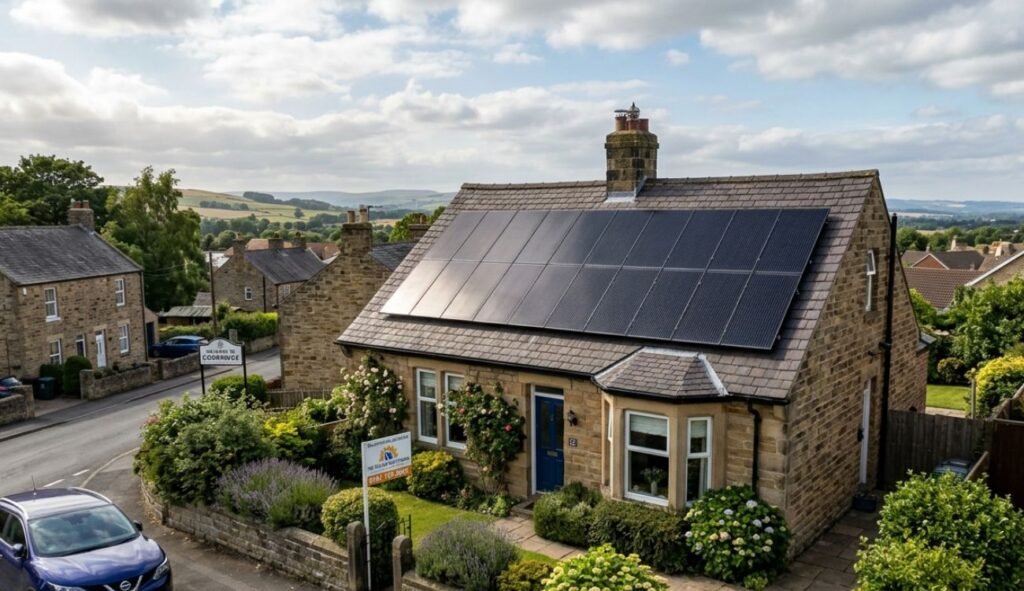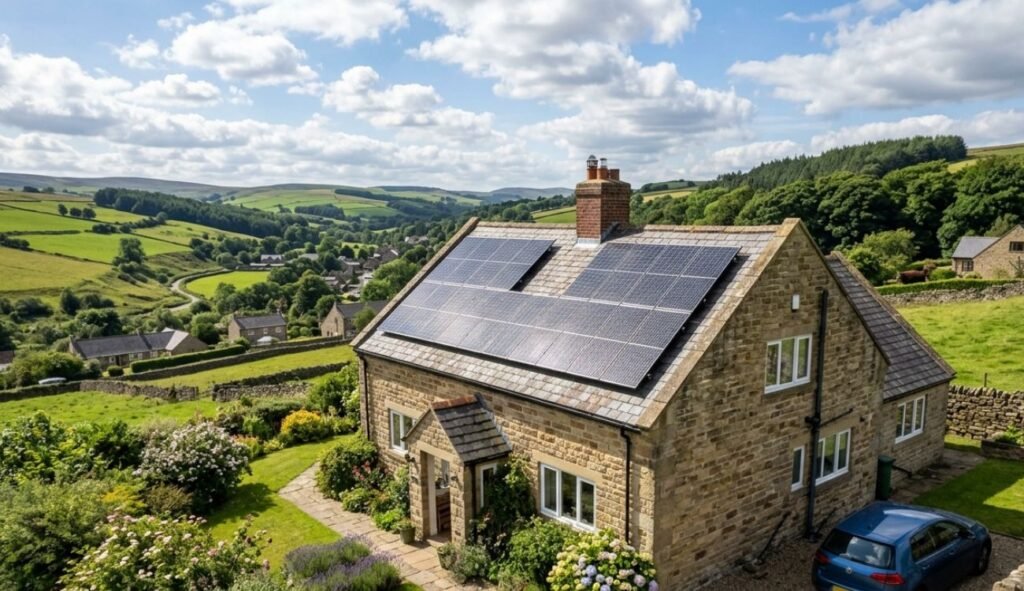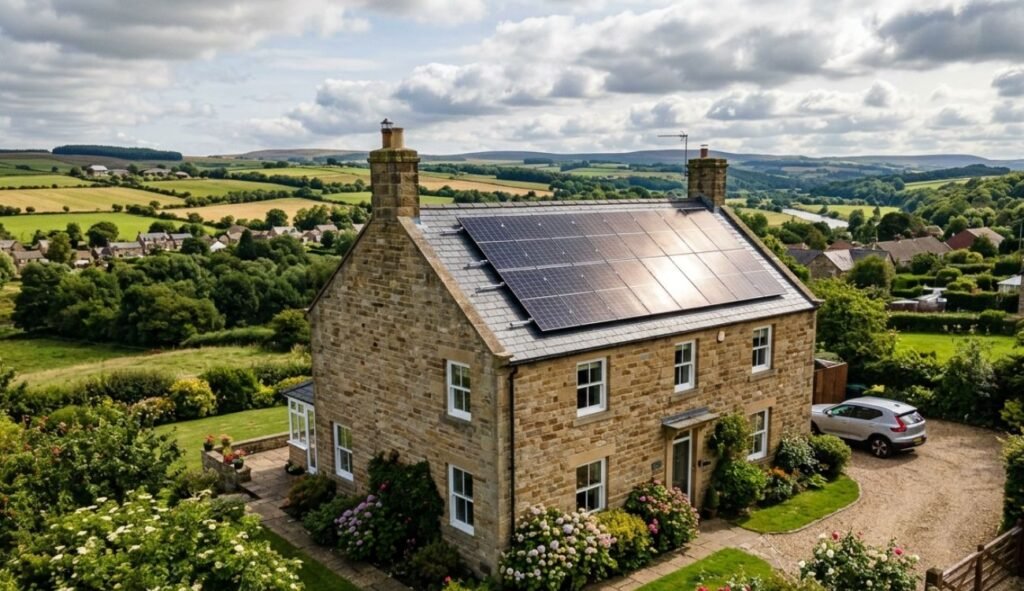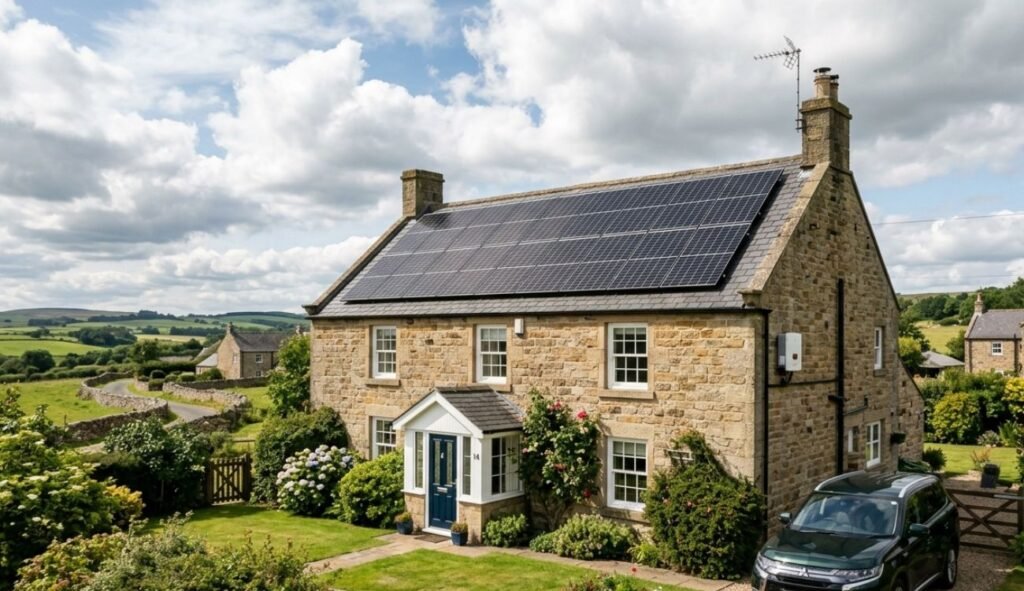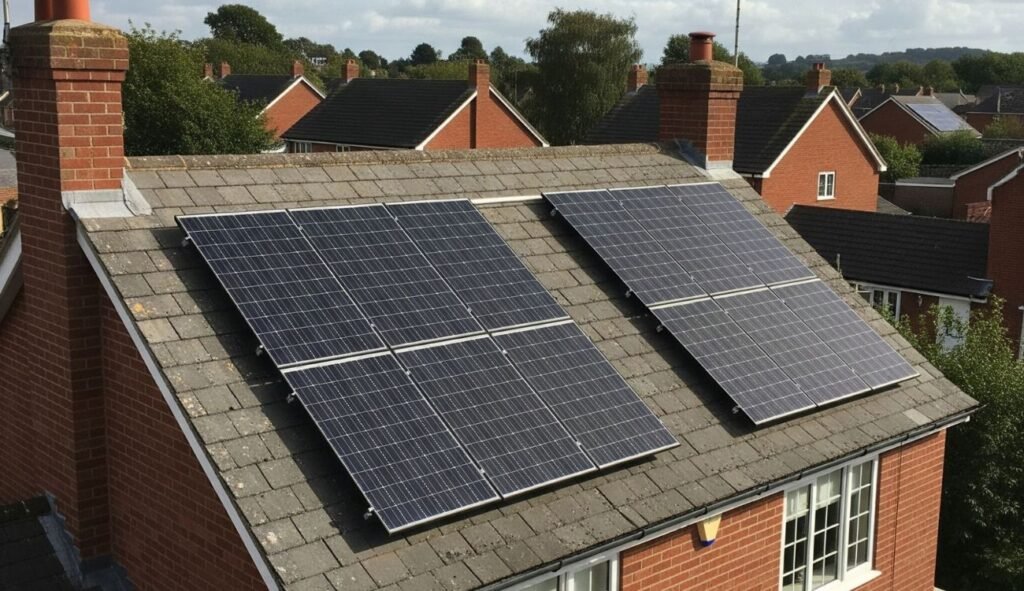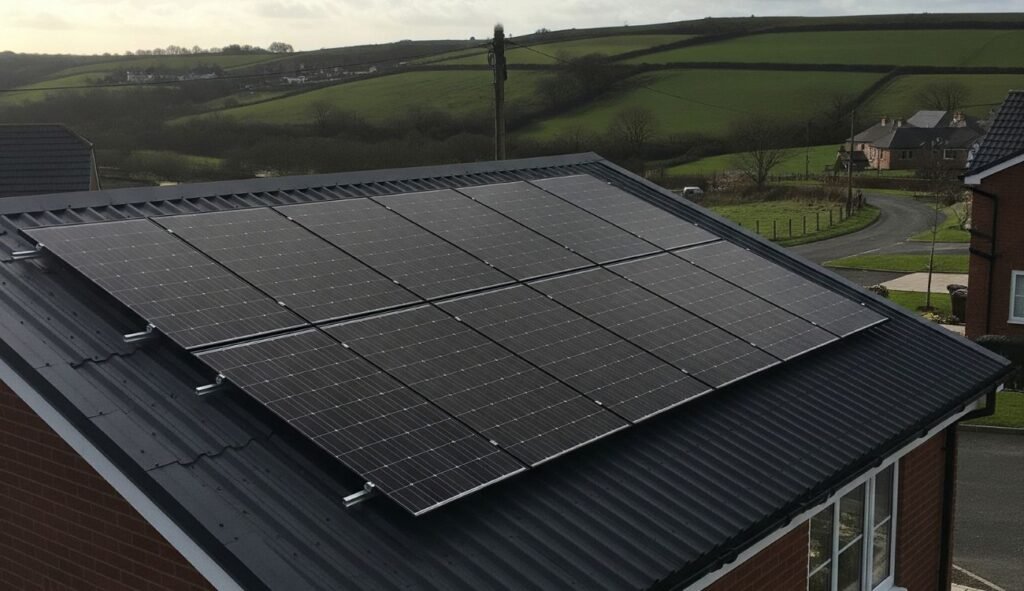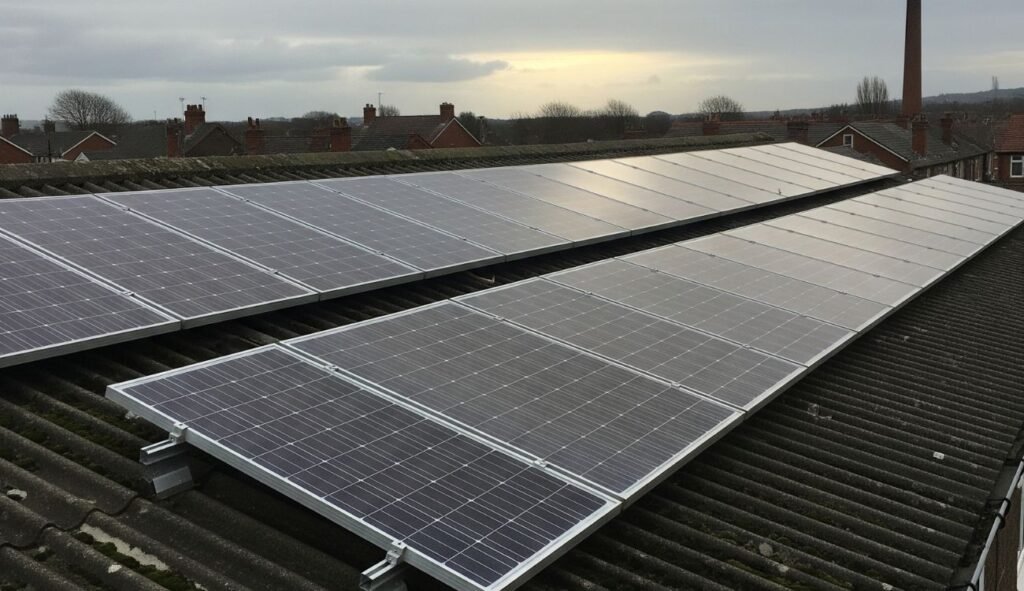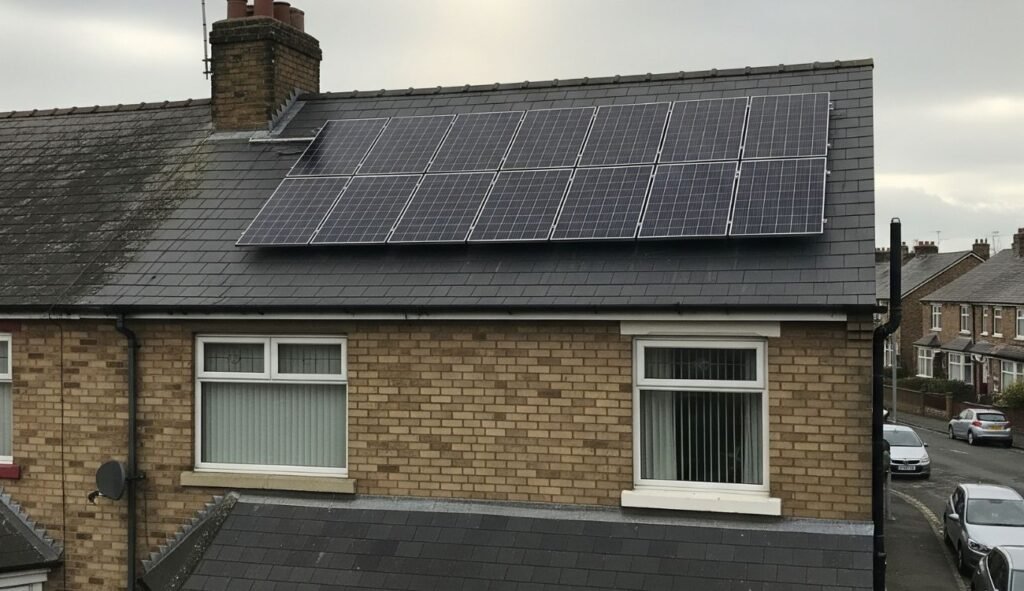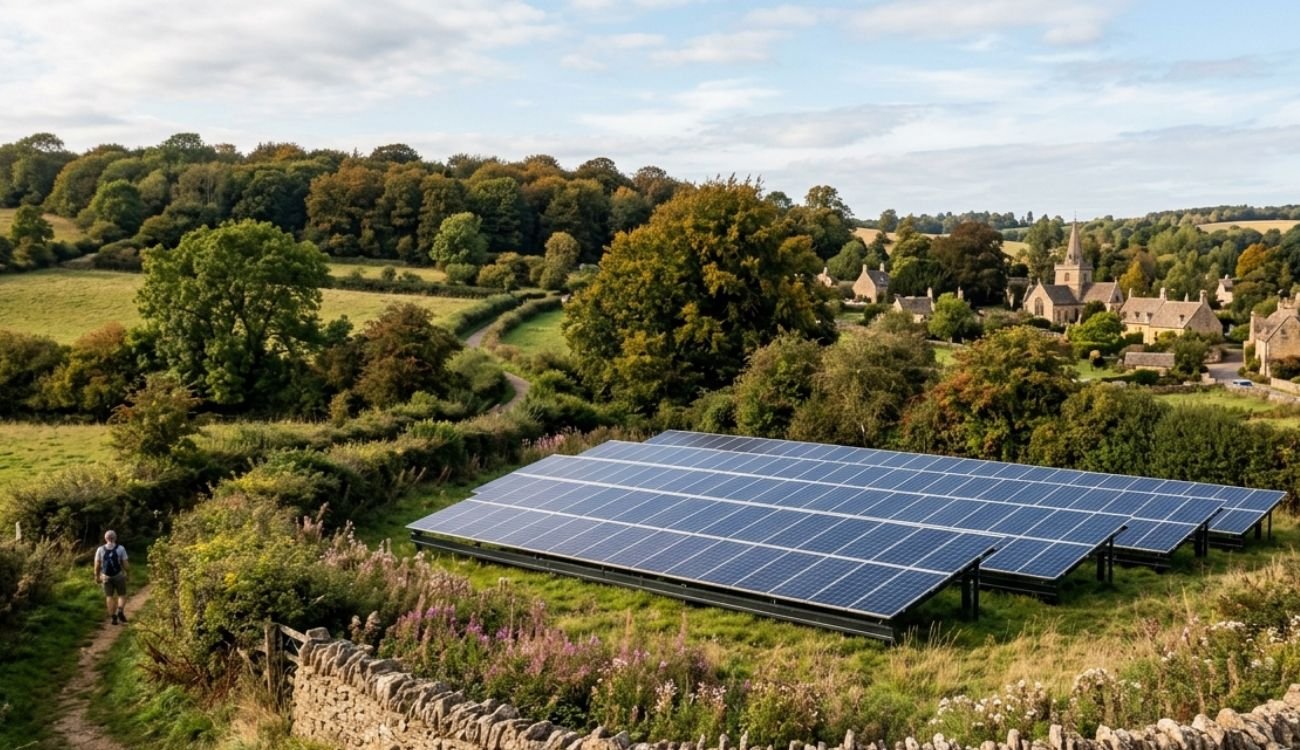

Yes, you can use solar panels in a conservation area. For most homeowners in the UK, including those in Tyne and Wear, Newcastle, and across the North East of England, permitted development rights mean you can go ahead without applying for full planning permission, provided your installation meets a set of straightforward conditions.
That said, conservation areas are not all the same. Some carry tighter restrictions than others, and knowing exactly what applies to your property can save you time, money, and a planning headache further down the line.
This guide covers everything you need to know, from the core rules and Article 4 Directions to listed buildings, ground-mounted alternatives, and what to do if you need to apply for planning permission.
Are Solar Panels Allowed in a Conservation Area?
Solar panels are allowed in a conservation area under the UK’s permitted development rights, which grant most homeowners automatic approval for roof-mounted systems without the need for a formal planning application.
These rights are set out in the Town and Country Planning (General Permitted Development) (England) Order 2015, and they apply across England, including properties in Newcastle, Gateshead, Sunderland, South Tyneside, and the rest of the North East.
The key word here is “permitted development.” It essentially means Parliament has pre-approved certain types of work on domestic properties, so your local council does not need to be involved unless specific restrictions have been placed on your area.
For the majority of homeowners living in conservation areas, this is great news. You are not automatically blocked from going solar simply because your street or neighbourhood is designated.
What Are the Rules for Solar Panels in Conservation Areas?
The rules for solar panels in conservation areas focus on visibility and minimal visual impact rather than a blanket ban. As long as your installation meets the following conditions, it qualifies as permitted development and no planning permission is required:
- Panels must not face a highway. If you live in a conservation area, solar panels cannot be installed on a wall or roof slope that faces a road or public highway. This is the single most important restriction for conservation area properties.
- Panels must not protrude more than 200mm from the roof surface when measured perpendicularly from the slope.
- Panels must not be higher than the main roof ridge line. They cannot sit above the highest point of your roof, excluding chimneys.
- Panels must be positioned to minimise visual impact. The installation should blend as sympathetically as possible with the existing roofline and building appearance.
- Panels must be removed when no longer needed. Once the system reaches the end of its useful life, it must be taken down.
- Panels cannot be installed on a listed building or on any building within the grounds of a listed building.
- Panels cannot be installed on a scheduled monument.
- On flat roofs, panels may project up to 0.6 metres above the flat roof surface following the 2023 and 2024 rule updates.
In practice, this means that if your property has a rear or side-facing roof slope that is not visible from the road, you can almost certainly install solar panels without applying for planning permission. Many homes in terraced streets across Tyneside and Wearside, for example, have rear-facing roof slopes that qualify comfortably.
What Is an Article 4 Direction and Does It Affect Solar Panels?
An Article 4 Direction is a planning regulation that allows a local authority to remove or restrict permitted development rights in a specific area. If one is in place where you live, you may need to apply for planning permission even if your solar installation would otherwise qualify as permitted development.
It is important to understand that not every Article 4 Direction blocks solar panels specifically. Each direction is written differently and targets different types of development. Newcastle City Council has 7 Article 4 Directions in place across various parts of the city. Some of these relate to things like extensions or outbuildings rather than solar panels directly.
How Do I Find Out If My Property Is Affected?
The simplest way to find out if an Article 4 Direction applies to your property is to contact your local planning authority (LPA) directly. In Newcastle, that is Newcastle City Council. In Sunderland, it is Sunderland City Council. In Gateshead, South Tyneside, and North Tyneside, contact the respective borough councils.
Most councils in the North East publish their Article 4 Directions online, and many will include maps showing the exact boundaries of affected areas. You can also check via the Planning Portal at planningportal.co.uk, which holds information about your property’s planning history and designations.
Do You Need Planning Permission for Solar Panels in a Conservation Area?
You only need planning permission for solar panels in a conservation area if one of the following applies to your property:
- Your installation is on a roof slope or wall that is visible from a public highway
- Your property falls within an Article 4 Direction that specifically removes solar panel permitted development rights
- Your home is a listed building or sits within the curtilage of one
- Your installation does not meet the standard conditions outlined above, such as the 200mm protrusion limit
If none of these apply, you can proceed under permitted development rights without any planning application. The honest reality is that the majority of homeowners in conservation areas across Newcastle, Gateshead, and Sunderland will not need planning permission, particularly if they install panels on a rear roof slope away from the street frontage.
How to Apply for Planning Permission If You Need It
Applying for planning permission for solar panels in a conservation area involves submitting a householder planning application to your local council. You will typically need:
- A site plan and roof elevation drawings showing the proposed panel positions
- A heritage statement explaining how the installation preserves or minimises harm to the character of the conservation area
- Photos of the property and the surrounding streetscape
Applications are submitted through your council’s online planning portal. Fees for householder planning applications in England start at around £258, and decisions are usually made within 8 weeks. A reputable MCS-certified installer like Future Heat Ltd can advise you on exactly what your application needs to include.
What About Listed Buildings in Conservation Areas?
Listed buildings in conservation areas face the strictest restrictions when it comes to solar panels. If your home is a listed building, you will need both planning permission and listed building consent before any solar installation can take place.
Listed building consent is a separate application from standard planning permission. It specifically protects the architectural and historic fabric of the building, meaning that any changes, including solar panels on the roof, must be assessed for their impact on the structure and appearance. Not all applications are refused.
Many listed building owners across the North East have successfully installed solar panels, particularly where panels are installed on less visible roof sections and where the wider public benefit of renewable energy generation is clearly demonstrated.
It is worth noting that a property does not have to be listed for extra scrutiny to apply. If you live in a conservation area next to a listed building, or within the grounds of a listed building’s curtilage, additional restrictions may still come into play.
Are There Alternatives If Roof-Mounted Panels Are Not Permitted?
If roof-mounted solar panels are not suitable for your conservation area property, there are alternatives worth exploring. Ground-mounted solar panels are an option for homeowners with sufficient garden space.
Under permitted development, a ground-mounted system must:
- Be no larger than 9 square metres in total area
- Have a maximum horizontal dimension of no more than 3 metres in any direction
- Be no taller than 4 metres in height
- Be positioned at least 5 metres from the property boundary
- Not be visible from a road if the property is in a conservation area
Solar roof tiles are another increasingly popular alternative for conservation area properties. These integrate into the existing roof structure and are designed to mimic the appearance of traditional roofing materials, which can make them far more acceptable to local planning authorities. They tend to cost more than standard panels but are worth considering if visual impact is the primary planning concern.
Will Solar Panels Affect the Value of My Home in a Conservation Area?
Solar panels generally increase residential property values in the UK rather than diminish them. Research has consistently shown that homes with solar photovoltaic systems attract a premium on the open market, largely because buyers recognise the long-term energy bill savings they deliver.
In conservation areas, the picture is a little more nuanced. Some buyers may be concerned about the appearance of panels on heritage properties. However, a sympathetically installed rear-facing system that is barely visible from the street is unlikely to put off prospective buyers and may well be a positive selling point, especially given rising energy costs across Tyne and Wear, Newcastle, and the wider North East.
Homeowners in the North East who have already made the switch to solar report meaningful reductions in their electricity bills. With the Smart Export Guarantee (SEG) also in place, you can earn money by exporting excess solar energy back to the national grid, adding a further financial incentive on top of the savings you generate by using the power you produce.
Get a Free Solar Panel Quote From Future Heat Ltd
If you are ready to explore solar panels for your home in a conservation area, Tyne and Wear, Newcastle, or anywhere across the North East of England, Future Heat Ltd is here to help. Our team understands local planning requirements inside and out. We carry out thorough pre-installation surveys, advise you on exactly what permissions you need, and handle every detail of the process from the first conversation through to a fully commissioned, MCS-certified installation.
Whether your property is in the heart of Grainger Town, a Victorian terrace in Jesmond, a period home in Sunderland, or a cottage on the fringes of the Tyne Valley, we have the experience to make solar work for you. Getting started is easy. Contact Future Heat Ltd today to request your free, no-obligation solar panel quote and find out how much you could save on your energy bills this year.
Frequently Asked Questions
Can I install solar panels on a flat roof in a conservation area?
Yes, you can install solar panels on a flat roof in a conservation area. Since the 2023 rule updates, panels on flat roofs may project up to 0.6 metres above the roof surface without requiring planning permission, as long as they are not visible from a public highway and the installation otherwise meets permitted development conditions.
Does the Smart Export Guarantee apply to homes in conservation areas?
Yes. The Smart Export Guarantee (SEG) applies to any eligible solar installation in the UK, including those in conservation areas. Provided your system is MCS-certified and meets the installer’s requirements, you can earn payments for every unit of surplus electricity you export to the grid, regardless of whether your property sits in a conservation area.
What happens if I install solar panels in a conservation area without permission when permission was needed?
If you carry out an installation that required planning permission but did not obtain it, your local planning authority can issue an enforcement notice requiring you to remove the panels at your own cost. In some cases, a retrospective planning application may be submitted after the fact, but this is not guaranteed to succeed and carries risk. Always confirm your requirements before installation.
Can a neighbour object to my solar panels in a conservation area?
If your installation qualifies as permitted development, a neighbour’s objection has no legal power to stop it. However, if planning permission is required, neighbours will have the opportunity to submit representations to the local planning authority as part of the statutory consultation process. The council must weigh up all representations before making its decision.
Are building regulations approval needed for solar panels in a conservation area?
Building regulations approval is generally not required for most roof-mounted solar PV installations on dwellings. However, the installation must be carried out by a qualified, MCS-certified installer to ensure it meets electrical and structural safety standards. Using a certified installer also protects your eligibility for the Smart Export Guarantee and gives you important consumer protections.

Jamie Maguire is Managing Director at Future Heat Ltd, the UK-based renewable energy company specialising in heat pumps, solar panels and energy-efficient boiler solutions. He leads the company’s strategic vision to decarbonise homes and businesses across the UK by delivering innovative, sustainable heating and power systems. Jamie is passionate about shaping the future of energy, supporting communities and empowering teams of skilled engineers to deliver lasting value and carbon reductions nationwide.