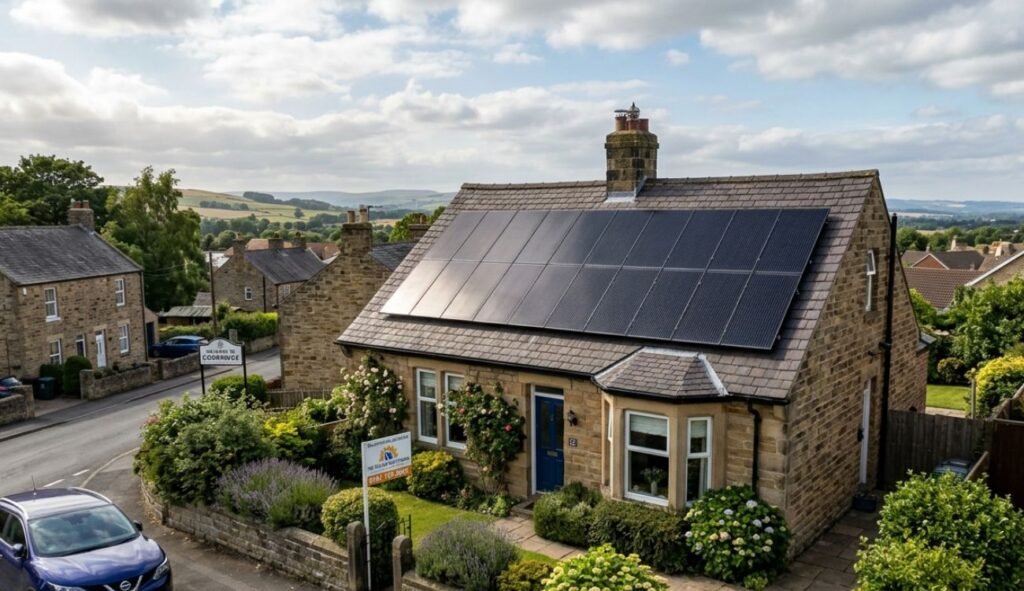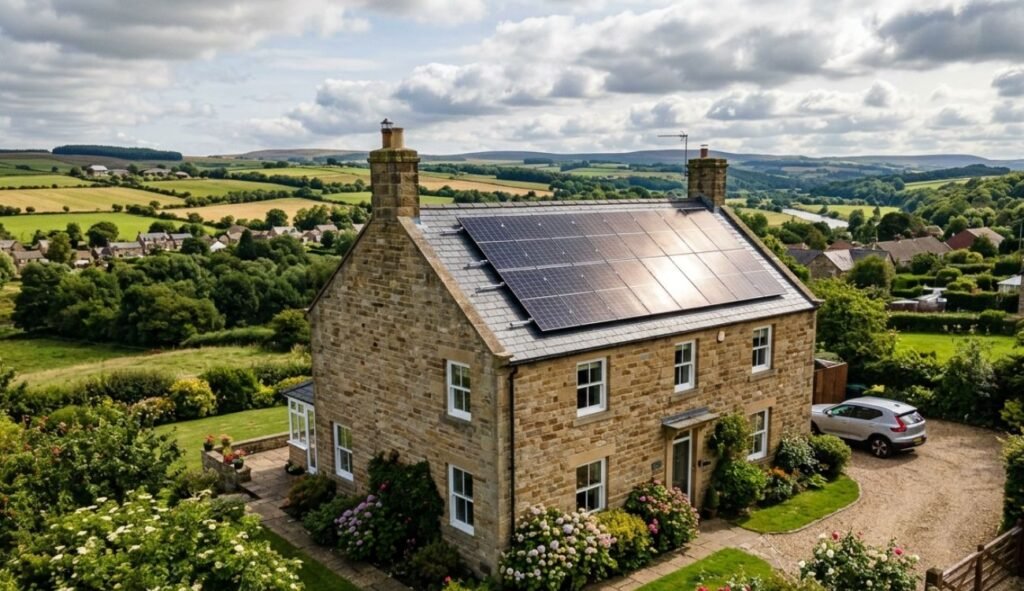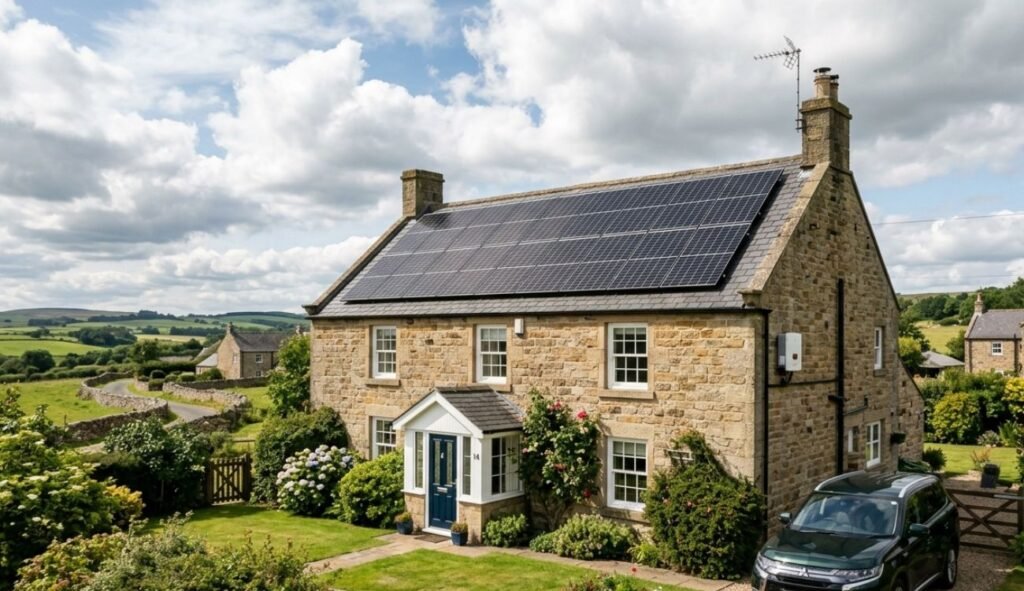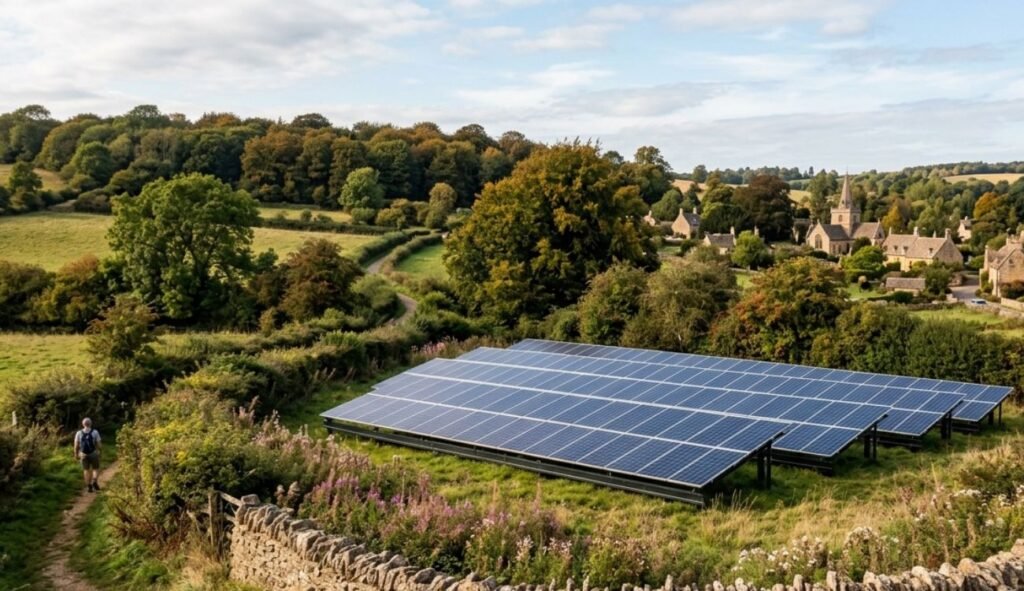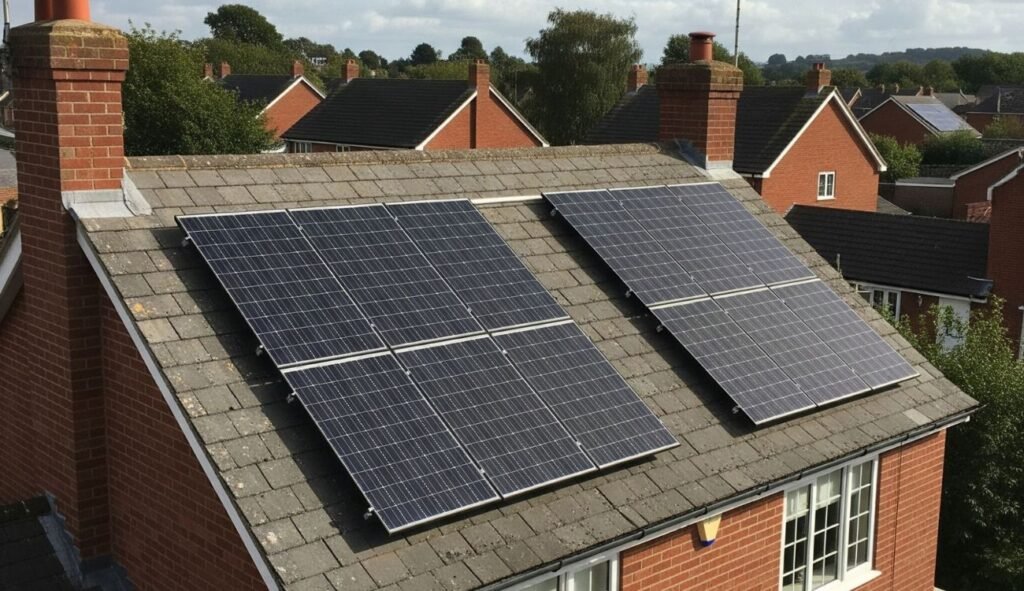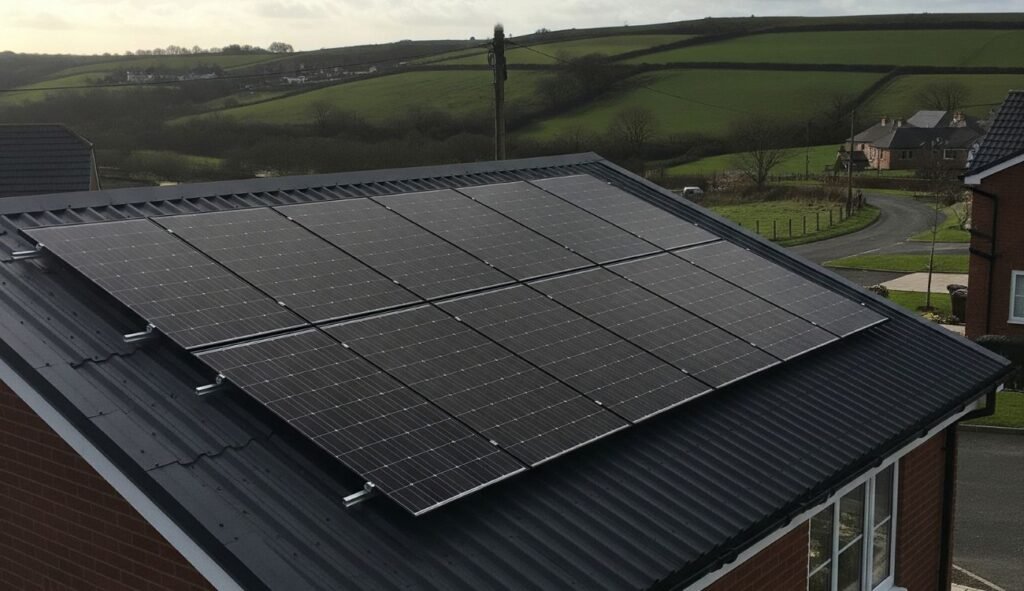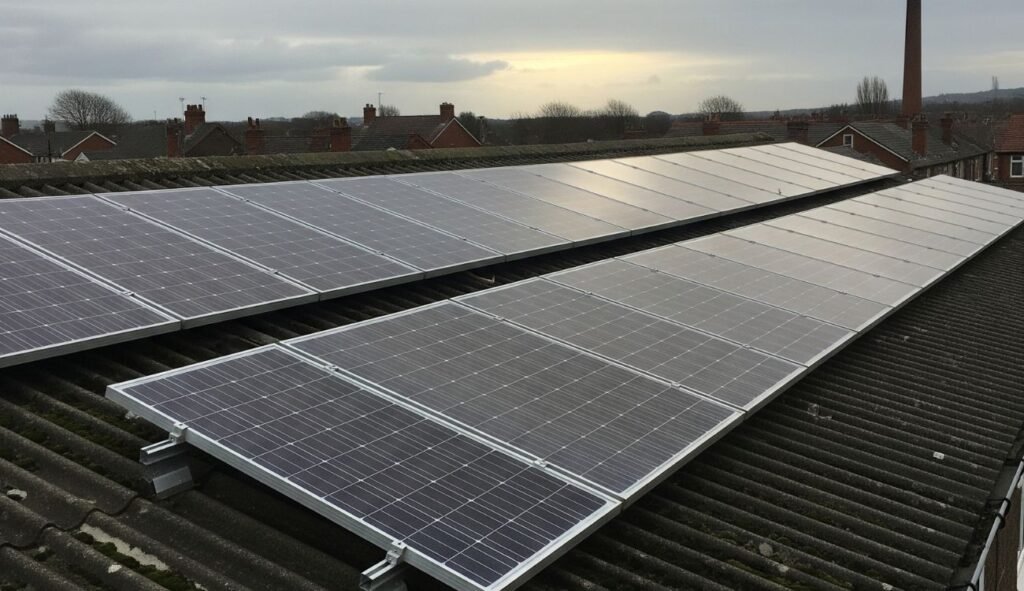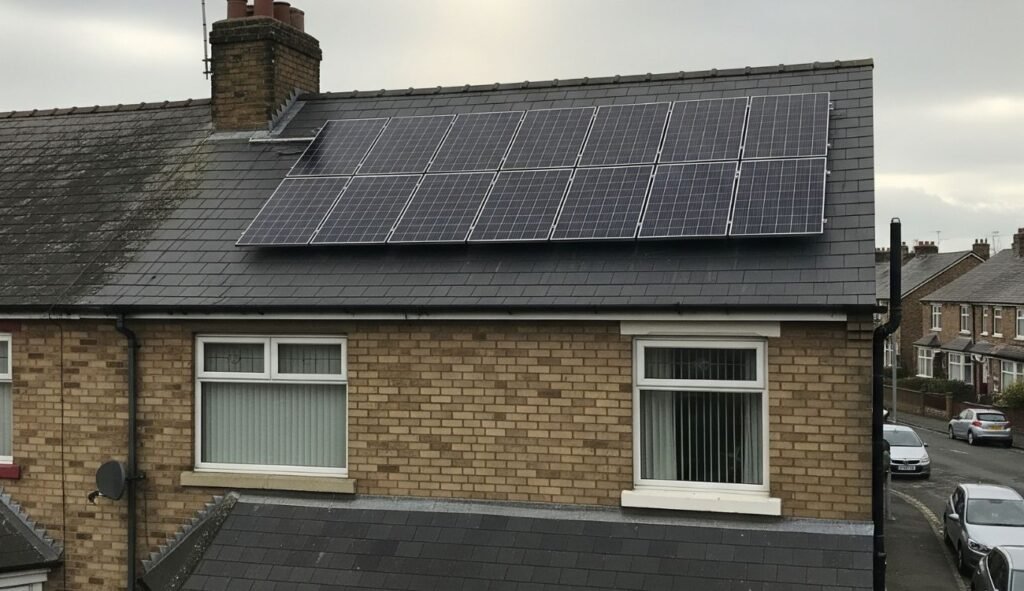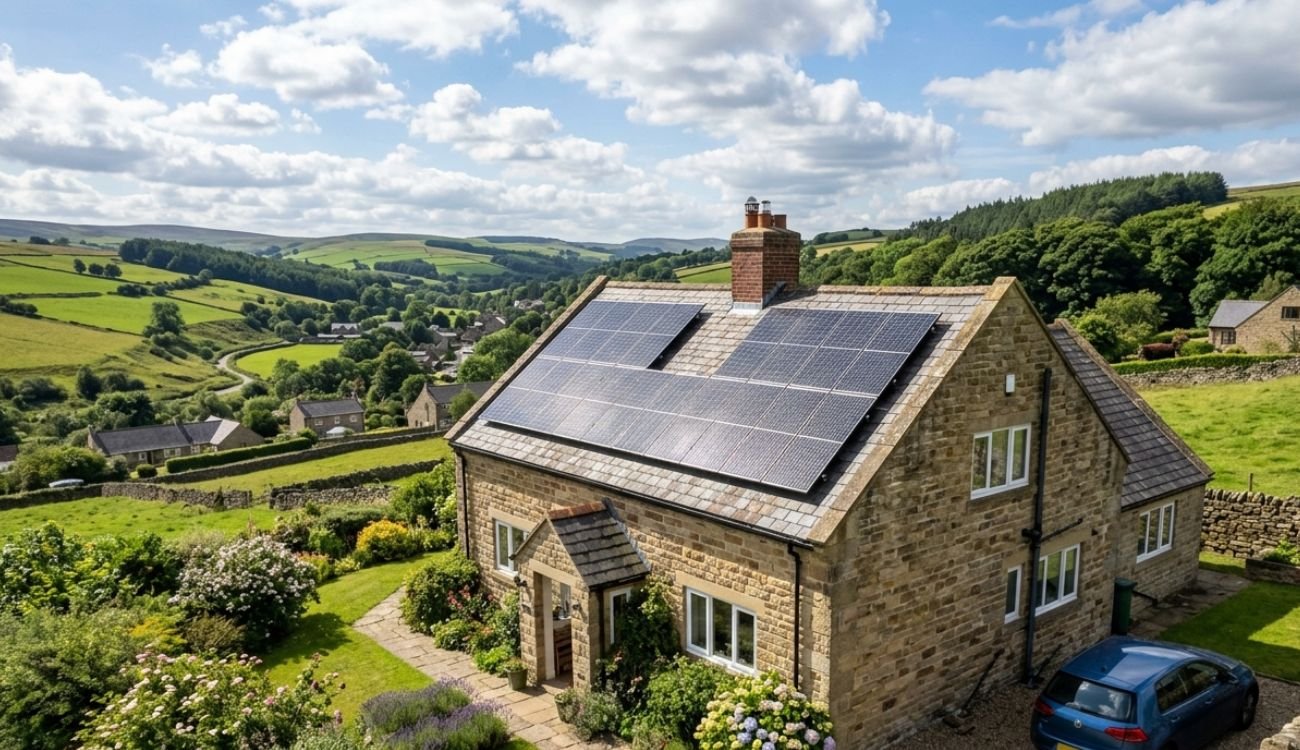

A typical 4kW solar panel system installed in the UK generates between 3,400 and 3,800 kWh of electricity per year. In Tyne and Wear specifically, that figure sits at around 3,440 kWh annually, which covers roughly 91% of an average household’s electricity needs.
This guide covers everything you need to know, from how system size affects output and what the seasons do to your generation figures, to what your specific roof in Tyne and Wear could realistically produce. No jargon, no guesswork. Just clear, practical information.
How Much Electricity Can Solar Panels Generate?
Solar panels in the UK can generate between 850 and 1,100 kilowatt-hours (kWh) of electricity per kilowatt-peak (kWp) of installed capacity each year, depending on location and roof conditions.
To put that into plain language: a standard 4kW solar panel system installed on a south-facing roof in the UK will typically produce around 3,800 to 4,140 kWh of electricity per year. That is roughly equivalent to the annual electricity consumption of an average UK household.
A single solar panel rated at 400 watts will typically produce around 340 kWh per year under UK conditions. Across a day, that same panel generates somewhere between 1.2 and 1.6 kWh, though this varies season to season.
How Much Does a Full Solar System Produce Per Year?
System size makes a big difference to your total annual output. Here is a straightforward breakdown of what common residential system sizes typically generate each year in the UK:
| System Size | Number of Panels (approx.) | Annual Output (kWh) | Best Suited For |
|---|---|---|---|
| 3 kW | 7-8 panels | 2,550-2,700 kWh | 1-2 person household |
| 4 kW | 9-10 panels | 3,400-3,800 kWh | 2-3 person household |
| 5 kW | 12-13 panels | 4,250-4,750 kWh | 3-4 person household |
| 6 kW | 14-15 panels | 5,100-5,700 kWh | 4-5 person household |
| 7 kW | 16-17 panels | 5,950-6,300 kWh | Large household |
A 7kWp system, for example, would generate around 6,300 kWh per year. For a larger family home in the North East, that kind of output can make a very meaningful dent in electricity costs.
How Much Electricity Do Solar Panels Produce in Tyne and Wear?
Solar panel electricity production in Tyne and Wear comes in slightly below the UK national average, but the difference is smaller than most people assume. The region receives approximately 1,320 sunshine hours per year, and the solar yield works out to around 860 kWh per kWp installed.
The UK average is 920 kWh per kWp, so Tyne and Wear sits roughly 7% below that benchmark.
In practice, a 4kWp solar system installed in Tyne and Wear generates approximately 3,440 kWh per year, which covers around 91% of the average household’s annual electricity use. That is a genuinely strong performance.
The North East is not the sunniest place in the country, but the combination of modern high-efficiency panels and well-optimised installation means homeowners here still see very real savings.
The Smart Export Guarantee (SEG) adds another income stream on top of that. Any excess electricity your panels generate and export back to the grid earns you a payment per kWh.
In 2026, the best fixed SEG rates are around 12p/kWh from providers like Octopus Energy and OVO Energy, with a typical 4kW system earning between £120 and £240 per year in export payments alone.
How Much Electricity Do Solar Panels Produce Per Day?
Daily solar panel electricity production depends on the time of year more than almost anything else. Across a full year, a 4.6kWp system in the UK averages around 11 kWh per day. But that average conceals a very wide range between summer and winter.
How Much Electricity Do Solar Panels Produce Per Square Metre?
Each square metre of solar panel in the UK typically produces between 0.6 and 0.8 kWh per day, based on around four peak sun hours and a panel efficiency of 15 to 20%. A standard residential solar panel today measures approximately 2 metres by 1 metre, so each panel covers 2 square metres of roof space and produces between 1.2 and 1.6 kWh per day on average.
To install a 4kW system, you typically need around 10 panels, which takes up roughly 20 square metres of usable roof space. Most standard UK semi-detached and detached houses in the North East have more than enough roof area to accommodate a system of this size.
What Factors Affect How Much Electricity Solar Panels Produce?
Solar electricity output is not fixed. Several variables play a direct role in how much your system generates, and understanding them helps you make a smarter buying decision.
Roof Orientation and Angle
South-facing roofs at an angle of around 35 degrees produce the most electricity in the UK. East or west-facing roofs can still work well and may generate roughly 80-85% of what a south-facing roof achieves. North-facing roofs are generally not recommended for solar installation.
Shading
Even partial shading from a nearby chimney, tree, or satellite dish can noticeably reduce your output. Modern systems often use microinverters or power optimisers on individual panels to minimise the impact of shading across the wider system.
Panel Quality and Wattage
Most residential solar panels installed today in the UK have a rated capacity of between 400W and 450W. Higher-rated panels produce more electricity from the same roof space. Quality also matters, as premium panels typically come with better degradation rates, meaning they hold their output capacity for longer over their 25-year-plus lifespan.
System Size
It sounds obvious, but the more capacity you install, the more electricity you produce. Matching your system size to your household’s actual energy consumption is where a good installer earns their value. Future Heat will always assess your home properly before recommending a system size.
Inverter Performance
The inverter converts the direct current (DC) your panels produce into the alternating current (AC) your home appliances use. A quality inverter reduces energy losses in this conversion process and keeps your system running at its best.
Solar Panel Output in Summer
During the summer months, from May through August, solar panels in the UK operate close to their full potential. Longer daylight hours and a higher sun angle combine to push output significantly higher. Between April and September, you can expect your system to generate around 65 to 75% of its total annual electricity.
A well-sized system in the North East can produce well over 20 kWh on a good summer day, which is enough to run a household and still export electricity back to the grid.
Solar Panel Output in Winter
Solar electricity production is considerably lower in winter. UK solar panels typically produce around 20 to 30% of their peak summer output during the colder months. Shorter days, lower sun angles, and more cloud cover all reduce generation.
Between October and March, you can expect to generate roughly 25 to 35% of your full annual output. The system keeps working, but you will draw more from the grid during these months.
The key point is that annual figures already account for this seasonal variation. The yearly savings and payback calculations your installer provides reflect the full picture, not just the sunny months.
Can Solar Panels Fully Power a House in the North East?
Solar panels can cover a large portion of a household’s electricity needs in the North East, though “fully powering” your home depends on your usage habits and system size. A 4kWp system in Tyne and Wear generating around 3,440 kWh per year lines up closely with the average UK household consumption of approximately 3,800 kWh per year.
The gap is small, and it narrows further if you use energy during daylight hours, shift appliance usage to peak generation times, or pair your panels with a battery storage system.
How Does Solar Panel Output Compare to Household Energy Use?
UK households use around 2,700 to 4,100 kWh of electricity per year on average. A 4kW solar system installed in Tyne and Wear generates around 3,440 kWh annually, which puts it squarely in line with average household consumption.
That alignment is meaningful. Homeowners across Tyne and Wear who have installed solar panels through companies like Future Heat are seeing real reductions in what they pay to the grid each year. When you consider that electricity unit rates in the UK remain high, even covering half your household usage through solar generation translates into hundreds of pounds saved annually.
Add in Smart Export Guarantee payments on surplus electricity, and the financial case for solar in the North East holds up very well.
A 4kWp system in Tyne and Wear is estimated to save homeowners over £963 per year, accounting for both reduced grid electricity purchases and SEG income. Over a 25-year panel lifespan, that adds up to a substantial return on the initial investment.
Get a Free Solar Panel Quote from Future Heat
If you are a homeowner or landlord in Tyne and Wear, Newcastle, Sunderland, Gateshead, or anywhere across the North East, finding out exactly how much electricity solar panels could produce on your specific roof is a straightforward process. Future Heat specialises in solar panel installations.
Our team will look at your roof orientation, available space, and current energy usage to give you a clear, honest picture of what a solar installation could generate for your household. We handle the full installation, from survey through to commissioning, and we are MCS-accredited, which means your system qualifies for Smart Export Guarantee payments from day one.
Request your free solar panel quote from Future Heat today and find out exactly how much you could save on your electricity bills.
Frequently Asked Questions
Do solar panels in the North East produce less electricity than in the South of England?
Yes, slightly. Tyne and Wear’s solar yield is approximately 860 kWh per kWp compared to the UK average of 920 kWh per kWp, placing it around 7% below the national average. However, modern high-efficiency panels largely offset this difference, and a 4kWp system in Tyne and Wear still covers around 91% of average household electricity use annually.
Does solar panel electricity production degrade over time?
Yes, but gradually. Most quality solar panels lose around 0.5% of their output efficiency per year, a rate known as the degradation rate. Over 25 years, this means your system will still produce around 87 to 90% of its original rated output, which is why long-term savings estimates remain strong throughout a panel’s working life.
Does adding a battery storage system increase how much electricity solar panels produce?
Adding a battery does not increase how much your panels generate, but it does increase how much of that generation you actually use. Without a battery, surplus electricity generated during the day gets exported to the grid. A battery stores that surplus so you can use it in the evening or overnight, improving your overall self-consumption and reducing your grid bills further.
How does cloud cover affect solar panel output in the North East?
Solar panels still generate electricity on overcast days because they respond to daylight, not just direct sunlight. Diffuse light on cloudy days will produce reduced but meaningful output. You can expect generation to be noticeably lower on heavily overcast days, but completely zero output only occurs in near-total darkness.
Tyne and Wear receives around 1,320 sunshine hours per year, and annual output estimates account for the region’s typical cloud patterns.
What is the difference between kW and kWh when talking about solar panel output?
Kilowatts (kW) describe the rated power capacity of a solar system, essentially its maximum potential output at any given moment. Kilowatt-hours (kWh) describe the actual amount of electricity produced or consumed over time.
A 4kW solar system does not produce 4kWh every hour; it produces 4kWh in an hour only under perfect conditions. Over a full year in Tyne and Wear, that same 4kW system realistically generates around 3,440 kWh of electricity.

Jamie Maguire is Managing Director at Future Heat Ltd, the UK-based renewable energy company specialising in heat pumps, solar panels and energy-efficient boiler solutions. He leads the company’s strategic vision to decarbonise homes and businesses across the UK by delivering innovative, sustainable heating and power systems. Jamie is passionate about shaping the future of energy, supporting communities and empowering teams of skilled engineers to deliver lasting value and carbon reductions nationwide.