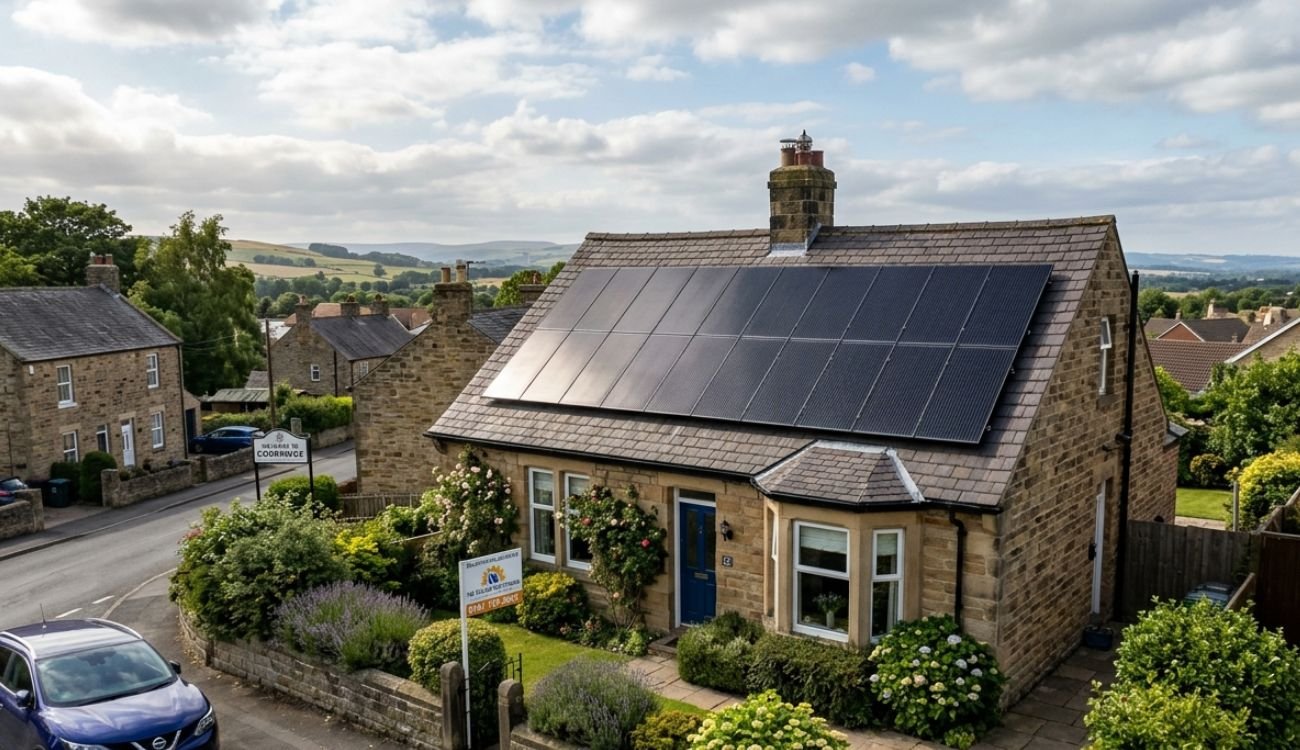

There are a few things to know before buying solar panels that could save you money, frustration, and a lot of head-scratching down the line.
This guide covers everything from roof suitability and costs to grants, warranties, and what to look for in a local installer. Whether you’re a homeowner in Gateshead or a landlord in South Shields, the information here is designed to help you make a confident, informed decision.
The 13 Most Important Things to Know Before Buying Solar Panels
The most important things to know before buying solar panels come down to your roof’s suitability, realistic costs, the incentives available to you, and whether you’re choosing the right installer. Getting these fundamentals right from the start means your system will deliver the savings and performance you’re expecting rather than falling short.
Below, we’ve broken everything down into 13 clear sections so you can work through each consideration at your own pace.
1. Is Your Roof Actually Suitable for Solar Panels?
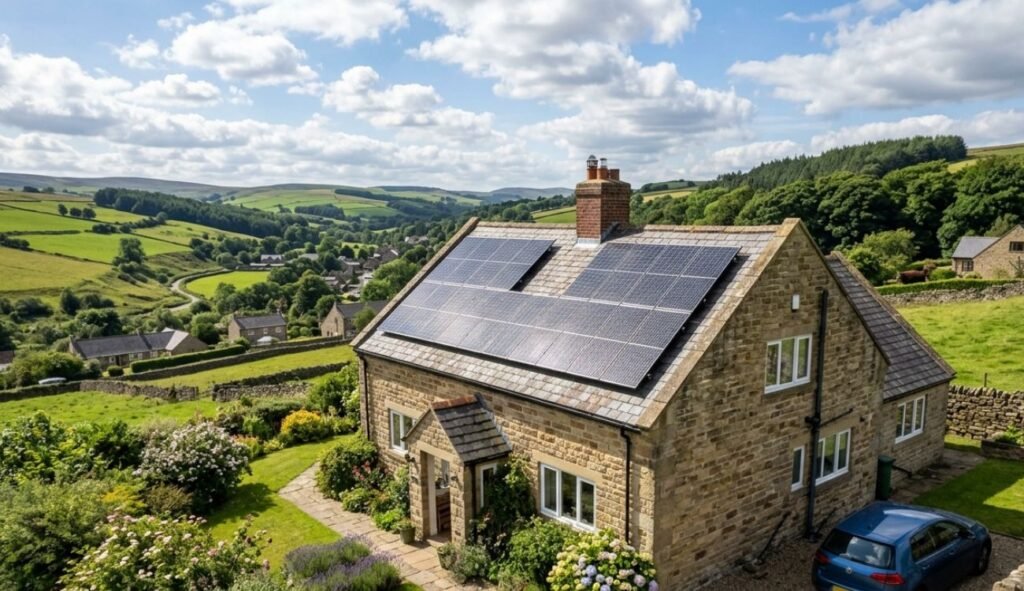
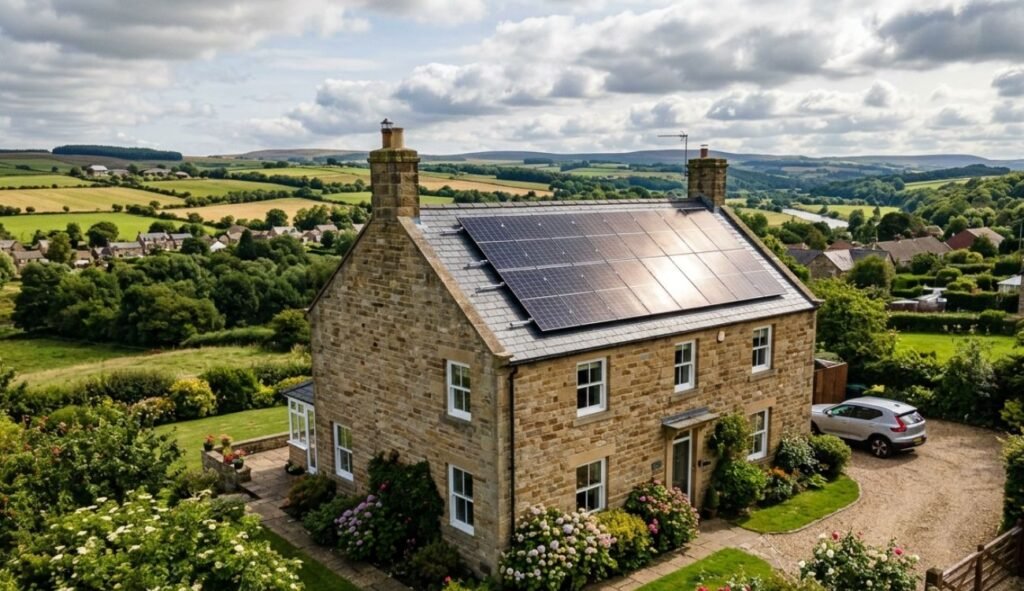
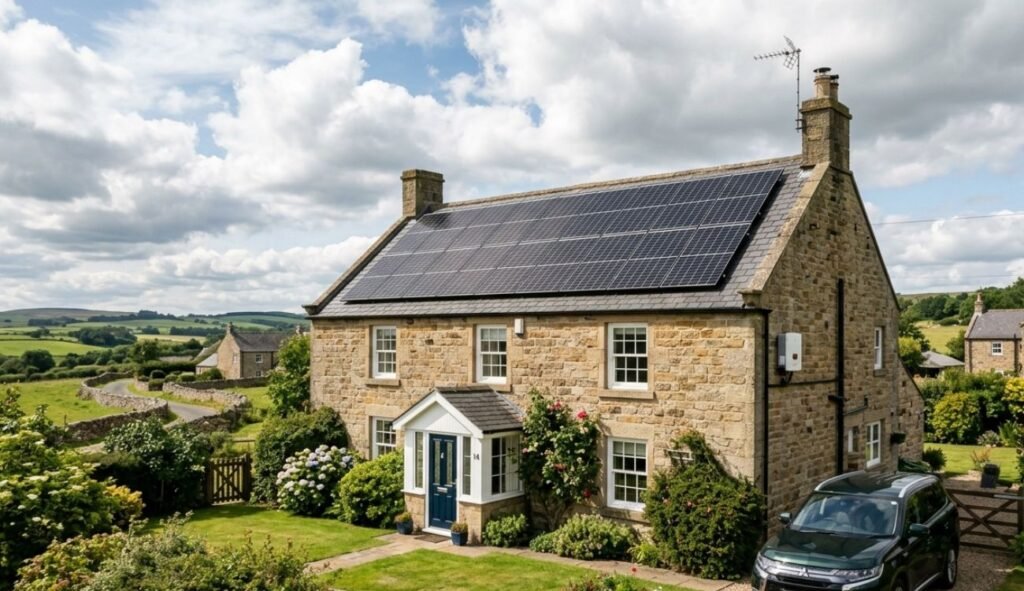
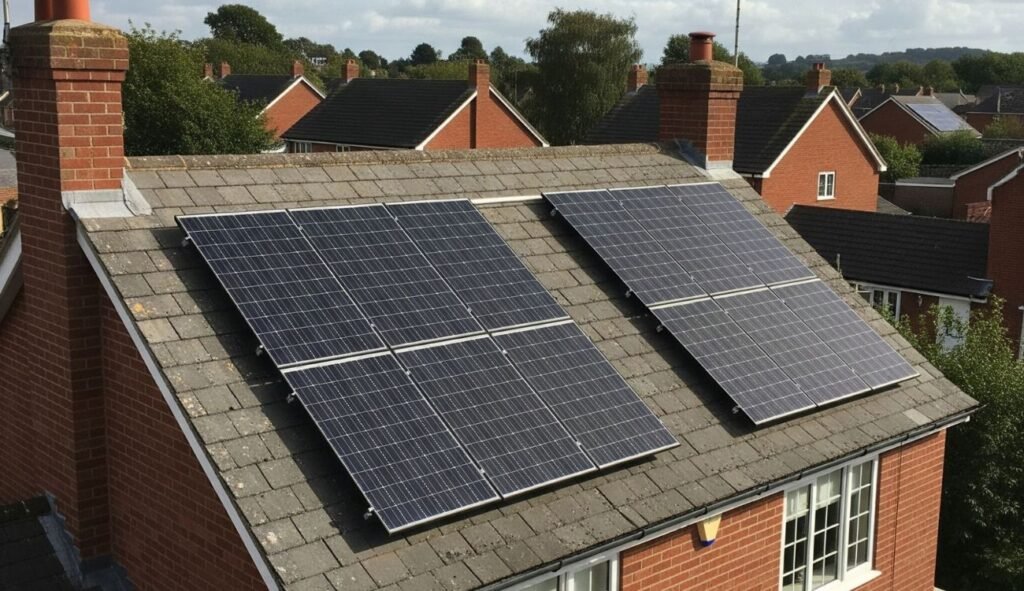
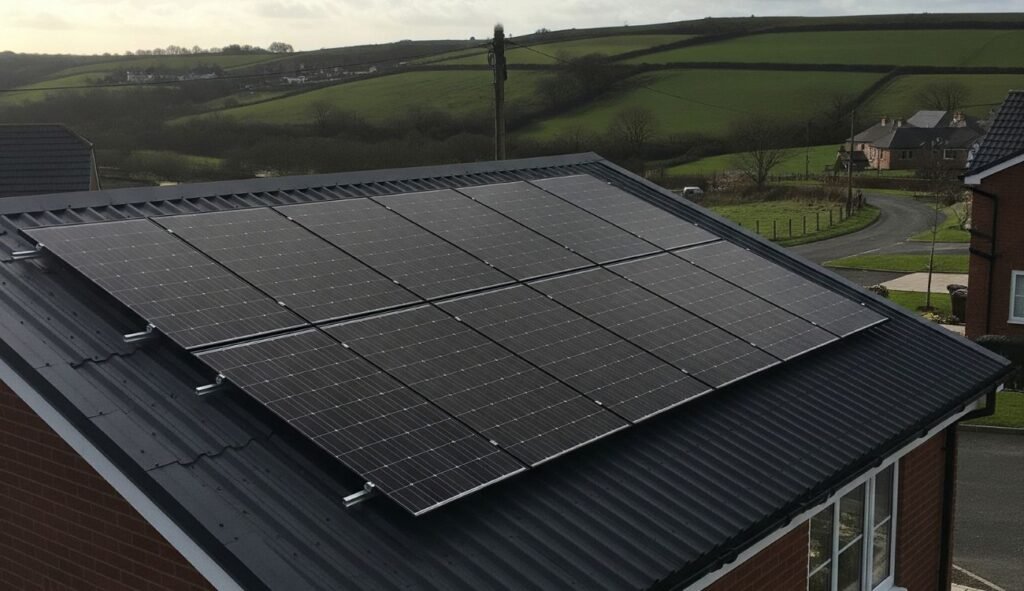
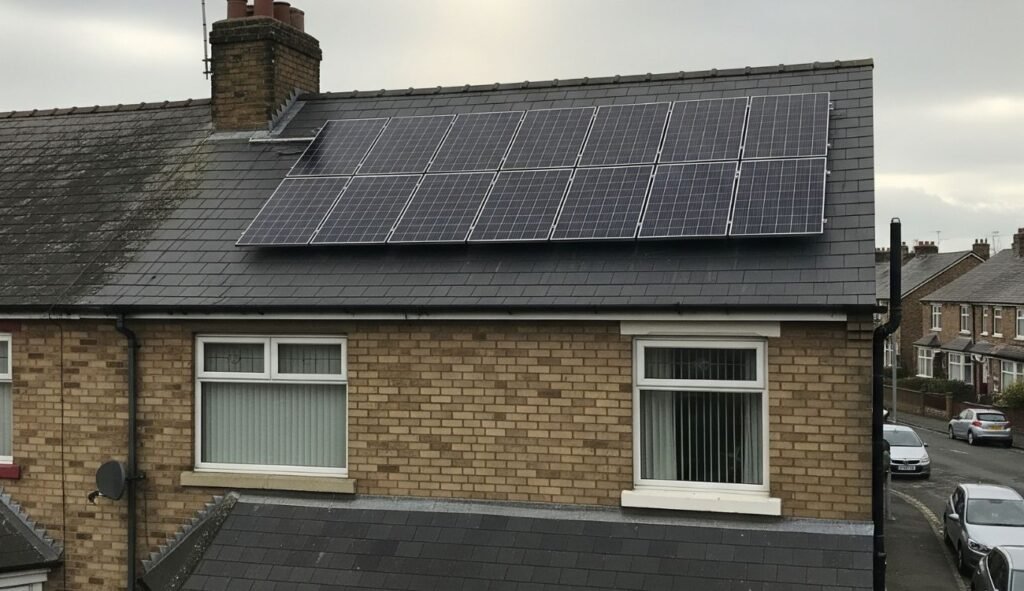
Your roof’s suitability for solar panels depends on its orientation, pitch, condition, size, and how much shade it receives throughout the day. The good news is that the vast majority of UK roofs are perfectly capable of supporting a solar installation.
Orientation is one of the biggest factors. South-facing roofs generate the most electricity in the UK, but south-east and south-west orientations still perform very well. Even east or west-facing roofs can be viable, particularly when paired with a battery storage system.
Pitch matters too. A roof angle of 30 to 40 degrees is considered ideal for UK conditions, though modern panels and skilled installers can optimise output on roofs that fall outside this range.
Shading is one of the most common obstacles. Trees, chimneys, and neighbouring buildings can reduce your system’s output significantly if they cast shade across your panels during peak hours. An MCS-certified installer will carry out a professional shading assessment as part of your survey.
Roof condition should also be assessed before installation. If your roof is ageing or has damaged tiles, it makes sense to address those issues before panels go on top. Replacing a roof with solar panels already installed adds unnecessary cost and complication.
2. Pricing
The cost of solar panels in 2026 depends on the size of the system you need, but for a typical 4kW installation on a three-bedroom home in the UK, you’re looking at between £6,000 and £8,000 fully installed.
Here’s a straightforward breakdown of typical system costs:
| System Size | Number of Panels | Installed Cost | Annual Bill Savings |
|---|---|---|---|
| 3kW | 7–8 panels | £4,500 – £6,500 | £450 – £650 |
| 4kW | 9–10 panels | £5,500 – £8,000 | £600 – £900 |
| 5kW | 12–13 panels | £7,000 – £9,500 | £750 – £1,100 |
| 6kW | 16–19 panels | £8,000 – £11,000 | £700 – £900+ |
These prices include panels, inverter, mounting hardware, all wiring, scaffolding, and installation by an MCS-certified engineer. The 0% VAT rate on solar panels remains in place in 2026, saving homeowners roughly £1,000 to £2,000 compared to the standard 20% rate.
It’s worth noting that solar panel costs have fallen by around 40% since 2020, and prices have broadly stabilised in 2025 and 2026. Further dramatic price drops are unlikely in the short term, which is one reason many homeowners in the North East are choosing to move now rather than wait.
3. What Size Solar Panel System Do I Need?
The right system size for you depends on how much electricity your household uses, the available roof space, and your budget. For most three-bedroom homes in the North East, a 4kW system is the most popular choice and typically meets around 40 to 60% of annual household electricity demand.
As a general guide:
- 1 to 2 bed properties: A 3kW system (7 to 8 panels) is usually sufficient
- 3 bed family homes: A 4kW to 5kW system (10 to 13 panels) works well
- Larger homes or those with an EV: A 6kW system (16 to 19 panels) or above is worth considering
Your installer will carry out a full energy audit and assess your consumption before recommending a system size. Don’t be tempted to go bigger than you need just for the sake of it. A well-matched system will perform better financially than an oversized one that exports more electricity than necessary at lower rates.
4. Planning Permission
Planning permission for solar panels is not required for the vast majority of UK homes. Under Permitted Development Rights, most residential solar panel installations are classified as “permitted development” and can go ahead without submitting a planning application.
However, there are important exceptions. You may need to apply for planning permission if:
- Your property is a listed building (listed building consent is also required)
- You live in a conservation area and want panels on a highway-facing wall
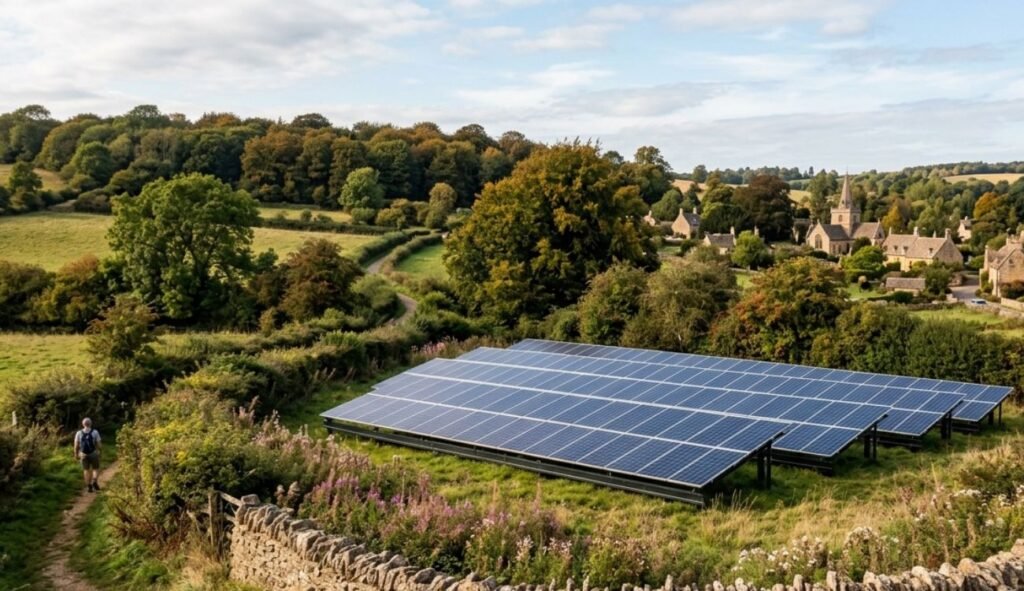
- You are installing ground-mounted panels that exceed permitted development limits
- Your property has had permitted development rights removed through an Article 4 direction
- You live in a flat where installation affects communal areas
If you live in a conservation area in Newcastle or anywhere across Tyne and Wear, it’s worth checking with your local planning authority before proceeding. A reputable local installer like Future Heat Ltd can advise you on this during your initial consultation.
5. Solar Panel Lifespan Warranty
Solar panels last a long time, typically between 25 and 40 years in UK conditions. Modern installations are designed around a 20 to 30 year service life, with manufacturers commonly offering a 25-year performance warranty on the panels themselves.
Here’s what a solid warranty package should include:
- 10-year product warranty covering materials and workmanship
- 25-year performance warranty guaranteeing at least 80% of original output at year 25
- Inverter warranty of 5 to 10 years (inverters may need replacing once during the system’s lifetime)
- Battery warranty of 5 to 15 years depending on the brand and model
The annual degradation rate for modern panels in UK conditions is around 0.3 to 0.5% per year, which means a 400W panel could still be generating around 340W to 360W after 25 years of use. That is genuinely impressive long-term performance for what is ultimately a one-off investment.
Always check the warranty terms carefully before you buy, and make sure your installer provides you with documentation for both the product and the installation workmanship.
6. Smart Export Guarantee and Money You Can Earn From Solar
The Smart Export Guarantee (SEG) is a UK government-backed scheme that pays homeowners for surplus solar electricity they export back to the national grid. Every unit of electricity your panels generate that you don’t use in your home can be sold to an energy supplier at a set rate per kilowatt-hour.
In 2026, the best fixed SEG rates available include:
- Good Energy: Up to 25p/kWh (variable tariff)
- Octopus Energy: 12p/kWh fixed
- OVO Energy: 12p/kWh
- E.ON Next: 10.5p/kWh
A typical 4kW solar system can earn between £120 and £240 per year in SEG payments. That might not sound huge on its own, but combined with the electricity bill savings from self-consumption, the overall financial picture is compelling.
To qualify for SEG payments, you need an MCS certificate for your installation and a smart meter. Both of these are standard requirements that your installer should arrange as part of the process.
7. Adding a Solar Battery
Adding a battery to your solar panel system is increasingly worth it for most UK homeowners, and around 94% of new solar installations in the UK now include a battery storage unit. The reason is straightforward. Without a battery, surplus electricity generated during the day is exported to the grid at relatively low rates. A battery lets you store that energy and use it in the evenings when demand and import prices are higher.
For households with higher evening electricity consumption, families with young children, or homes with an EV charger, the battery often accelerates your payback period rather than extending it. Battery costs vary depending on size, but a 5kWh battery typically adds £3,000 to £4,500 to the overall system cost.
8. How Solar Panels Save on Energy Bills
Solar panels can reduce your electricity bills by up to 70% annually in the UK, particularly when paired with a battery storage system. For a typical North East household with a 4kW system, expect annual savings in the range of £600 to £900 without a battery, rising to £850 or more with storage.
In Tyne and Wear, solar panels on a 4kWp system generate over 3,440 kWh of electricity per year, which is enough to cover around 91% of an average household’s electricity consumption. That is a meaningful reduction in reliance on the grid. With electricity prices remaining elevated in 2026, the savings case for solar in the North East is stronger than it has ever been.
The payback period for a 4kW system in the UK currently sits between 7 and 10 years, after which the electricity you generate is effectively free.
9. Does Solar Generation Work in the North East’s Climate?
Solar panels in the North East still generate a useful amount of electricity despite the region’s reputation for overcast skies. Tyne and Wear receives around 1,320 sunshine hours per year, and a standard 4kWp system in the area produces over 3,440 kWh of electricity annually.
Solar panels work on daylight, not just direct sunshine. Even on cloudy days, modern panels continue to generate electricity, though output is naturally higher on bright days. The North East ranks 60th out of 102 UK counties for solar yield, which places it in the lower-middle tier nationally, but it is far from unviable.
Thousands of homeowners across Newcastle, Gateshead, Sunderland, and South Tyneside already have working solar systems delivering real savings on their bills.
For context, an estimated 2,800 MCS-certified solar installations were completed in Tyne and Wear in 2025 alone. Clearly, the climate concern is one that local homeowners are increasingly looking past.
10. What Is an MCS-Certified Installer and Why Does It Matter?
An MCS-certified installer is a solar panel installation company that has been assessed and accredited under the Microgeneration Certification Scheme, which sets the standard for quality and safety in the UK renewable energy sector. Choosing an MCS-certified installer is not just about quality assurance. It is a practical requirement.
Without an MCS-certified installation, you cannot:
- Receive Smart Export Guarantee (SEG) payments
- Access most government-backed grants or incentives
- Demonstrate compliance with building regulations under Part P
MCS-certified installers are required to provide you with an accurate performance estimate, a drawing of the panel layout, and product datasheets before you commit to anything. They must also notify the Distribution Network Operator (DNO) about your installation. This is all part of the process that your installer should handle on your behalf.
Future Heat Ltd is MCS certified and has served residential and commercial customers across South Tyneside and the wider North East. Choosing a locally accredited installer means someone who knows the area, understands regional planning rules, and can be on hand if you ever need support after installation.
11. Will Solar Panels Increase My Home’s Value?
Solar panels can increase your home’s value, and in 2026 the evidence is particularly strong. Recent data suggests that solar panels increase the value of a UK property by between 4% and 14%, with some estimates for homes with battery storage systems sitting at the upper end of that range.
For a 2 to 3 bedroom home, the property value uplift from solar typically falls between 6.2% and 6.8%. That means if your home is worth £200,000, installing solar panels could realistically add £12,400 to £13,600 to its market value.
There is also a growing trend of buyers actively looking for homes with solar panels already installed. Energy efficiency is now a major purchase consideration, and homes with a better Energy Performance Certificate (EPC) rating sell faster and command stronger offers. Adding solar panels is one of the most effective ways to improve your EPC rating, which matters both for resale and for mortgage purposes.
12. What Questions Should I Ask My Solar Panel Installer?
The right questions to ask your solar panel installer will help you avoid poor quality systems, hidden costs, and aftercare problems.
13. Solar Panel Grants or Funding Available
Solar panel grants in the UK in 2026 are more limited than they were during the Feed-in Tariff era, but there are still financial incentives worth knowing about. The most accessible ones include:
0% VAT on solar panels: All domestic solar panel and battery storage installations in the UK are currently exempt from VAT, saving homeowners approximately £1,000 to £2,000 on a typical installation.
Smart Export Guarantee (SEG): As covered above, you receive ongoing payments for surplus electricity exported to the grid for the life of your system.
ECO4 Scheme: Low-income households or those receiving certain benefits may be eligible for free or heavily subsidised solar panels through the government’s ECO4 scheme. Your installer can help you check eligibility.
Great British Insulation Scheme: While primarily focused on insulation, this scheme occasionally works alongside other energy efficiency measures including solar. It is worth asking your installer whether you qualify.
Local Authority Funding: Some local councils in the North East offer additional support for renewable energy upgrades. Checking with your local authority before you proceed is a good habit.
Even without a direct grant, the combination of 0% VAT, SEG payments, and long-term bill savings makes solar an attractive investment for most households in 2026.
Ready to Go Solar in the North East? Get a Free Quote From Future Heat Ltd
If you have worked through this guide and feel ready to take the next step, Future Heat Ltd is here to help. Future Heat is an MCS-certified solar panel installer serving homeowners and landlords across Tyne and Wear, Newcastle, and the wider North East of England.
Getting a quote costs nothing and commits you to nothing. You’ll receive a personalised assessment of your roof, a recommended system design, and a clear breakdown of your expected savings and payback period.
Request your free solar panel quote from Future Heat Ltd today and start your journey towards lower energy bills and a more energy-independent home.
Frequently Asked Questions
Can I install solar panels on a rented property?
Tenants cannot install solar panels without the landlord’s permission. However, landlords themselves can install solar panels on rental properties and benefit from increased property value and better EPC ratings.
Some landlords pass on bill savings to tenants as part of rental agreements. If you are a tenant interested in solar, speaking to your landlord is the first step.
Do solar panels require much maintenance?
Solar panels require very little maintenance once installed. The rain in the North East tends to keep panels reasonably clean on its own. An annual visual inspection and occasional professional check-up every few years is generally sufficient.
Your inverter and battery storage system may need attention more regularly, so monitoring tools provided by your installer are particularly useful for catching any performance drops early.
What happens to solar panels if I sell my home?
Solar panels are generally considered a fixture of the property and are included in the sale unless otherwise agreed in writing. Before selling, make sure you pass on all MCS certificates, warranty documentation, and SEG tariff registration details to the new owner, as they will need these to continue receiving export payments and to claim any future incentives.
Can solar panels power my home during a power cut?
Standard grid-connected solar panel systems do not power your home during a grid outage, as they are designed to shut down automatically for safety reasons. However, certain hybrid inverter systems paired with a battery storage unit can provide limited backup power during outages.
If this is important to you, discuss “islanding” or “off-grid capability” with your installer before purchasing.
Does the direction my house faces affect whether solar is viable?
South-facing roofs generate the most electricity in the UK, but they are not the only viable option. South-east and south-west orientations perform well, typically generating 95% to 99% of the output of a true south-facing roof. East and west-facing roofs can also work effectively, especially when split across both sides with micro-inverters or power optimisers. Very few roofs in the North East are genuinely unsuitable.

Jamie Maguire is Managing Director at Future Heat Ltd, the UK-based renewable energy company specialising in heat pumps, solar panels and energy-efficient boiler solutions. He leads the company’s strategic vision to decarbonise homes and businesses across the UK by delivering innovative, sustainable heating and power systems. Jamie is passionate about shaping the future of energy, supporting communities and empowering teams of skilled engineers to deliver lasting value and carbon reductions nationwide.